The question I wish someone had answered properly before I wasted $400 in week one
Let me start with a confession.
When I first activated ads on my Sellvia store, I had absolutely no idea what I was doing. I saw “$10/day minimum” in the dashboard, thought “that’s basically nothing,” set it to $30/day because I wanted to “see results faster,” and watched $420 disappear over two weeks while I figured out what I was even looking at.
Not a catastrophic loss. But a completely avoidable one.
What I didn’t have was a clear framework for thinking about ad budgets at different stages of this business. How much to spend when you’re testing. When to scale. What numbers actually mean something. Where most people bleed money unnecessarily.
That’s what this article is. Everything I learned, laid out in the order I wish I’d had it.
First: Reframe What “Ad Budget” Actually Means
Most people treat their ad budget like a vending machine. You put money in, sales come out. If sales don’t come out, the machine is broken.
That’s not how this works.
A more accurate mental model is that your ad budget in the early stages is almost entirely paying for information. You’re finding out which products resonate with which audiences at which price points. The sales are a bonus. The data is the product. Once you shift to thinking about it this way, “I spent $200 and got 3 sales” stops feeling like a loss and starts feeling like a research investment - because now you know what works, and that knowledge is what you scale.
This reframe matters because it changes your relationship with ad spend completely. You stop panicking when early campaigns underperform, and you start looking for signals instead of just checking your sales total.
Phase 1: The Testing Phase (Weeks 1–4)
Recommended budget: $10–$15/day
This is where most people overspend, counterintuitively. They see low daily minimums and interpret them as a suggestion to spend more. Don’t.
In the testing phase, your only job is to figure out which products in your catalog actually attract clicks and which product pages actually convert those clicks into purchases. You cannot know this in advance. You have to spend to find out.
At $10–$15/day, you have enough data coming in to make meaningful decisions without burning through your reserves before you’ve learned anything useful.
What you’re watching in this phase:
CTR (Click-Through Rate) - Are people actually clicking? If your CTR is below 0.5% on most products, something about the creative or the audience is off. Above 1.5% is a good early signal.
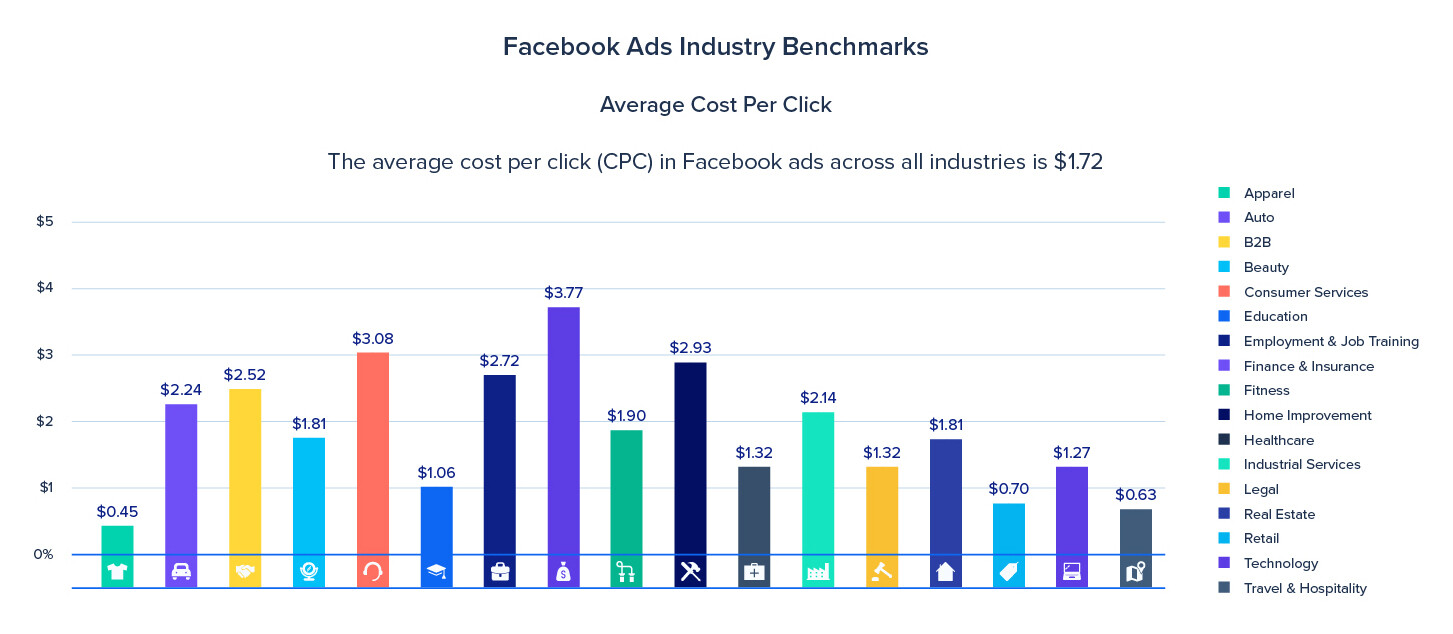
Cost Per Click - What are you paying per visitor? This varies by platform and niche, but as a rough benchmark, if you’re paying more than $1.50–$2.00 per click with zero conversions after 100+ clicks, that product/audience combination isn’t working.
Conversion rate on the product page - This is separate from the ad itself. Traffic can be perfectly good and still not convert if the product page has issues. Sellvia’s default pages are solid, but it’s worth checking if something about the price point or presentation is creating friction.
Run each product for a minimum of 7 days before making any judgment. Less than that and you’re not seeing real data - you’re seeing noise.
Phase 2: Early Optimization (Weeks 4–8)
Recommended budget: $15–$25/day
By week four you should have some signal. Not necessarily sales - but signal. You know which products got clicks. You might have your first conversion or two. You have a clearer picture of what’s working and what’s not.
This phase is about pruning and doubling down.
Kill anything that hasn’t shown meaningful engagement after 10–14 days. Not “hasn’t made money” - hasn’t shown any signal. Zero clicks, consistently terrible CTR, nothing. Those products get paused.
Take the products that showed promise and give them a slightly higher daily budget - maybe $5–$10 more per day on each - to get more data faster.
The mistake people make here is spreading budget too thin across too many products at once. If you’re running 8 products at $3/day each, you’re not getting enough data on any of them to make real decisions. Concentrate your budget. Four products at $6/day is better than eight products at $3/day.
Also in this phase: start looking at your margins seriously. For every product that’s getting conversions, calculate:
- What the customer paid
- What you paid to process the order
- What your actual commission was
- What your ad cost was per conversion
If ad cost per conversion is eating your entire commission, that product isn’t profitable at this traffic cost. You either need to increase the product price, reduce ad spend, or improve the conversion rate before scaling.
Phase 3: Scaling What Works (Month 2-3+)
Recommended budget: $25–$50/day on proven products
This is the phase most people never reach because they gave up in phase one or burned their budget in phase two. But if you’ve made it here, you have something valuable: proof of concept.
You know which products convert. You know roughly what your cost per acquisition looks like. You know the margin. Now the math tells you how much to spend.
Here’s a simple framework:
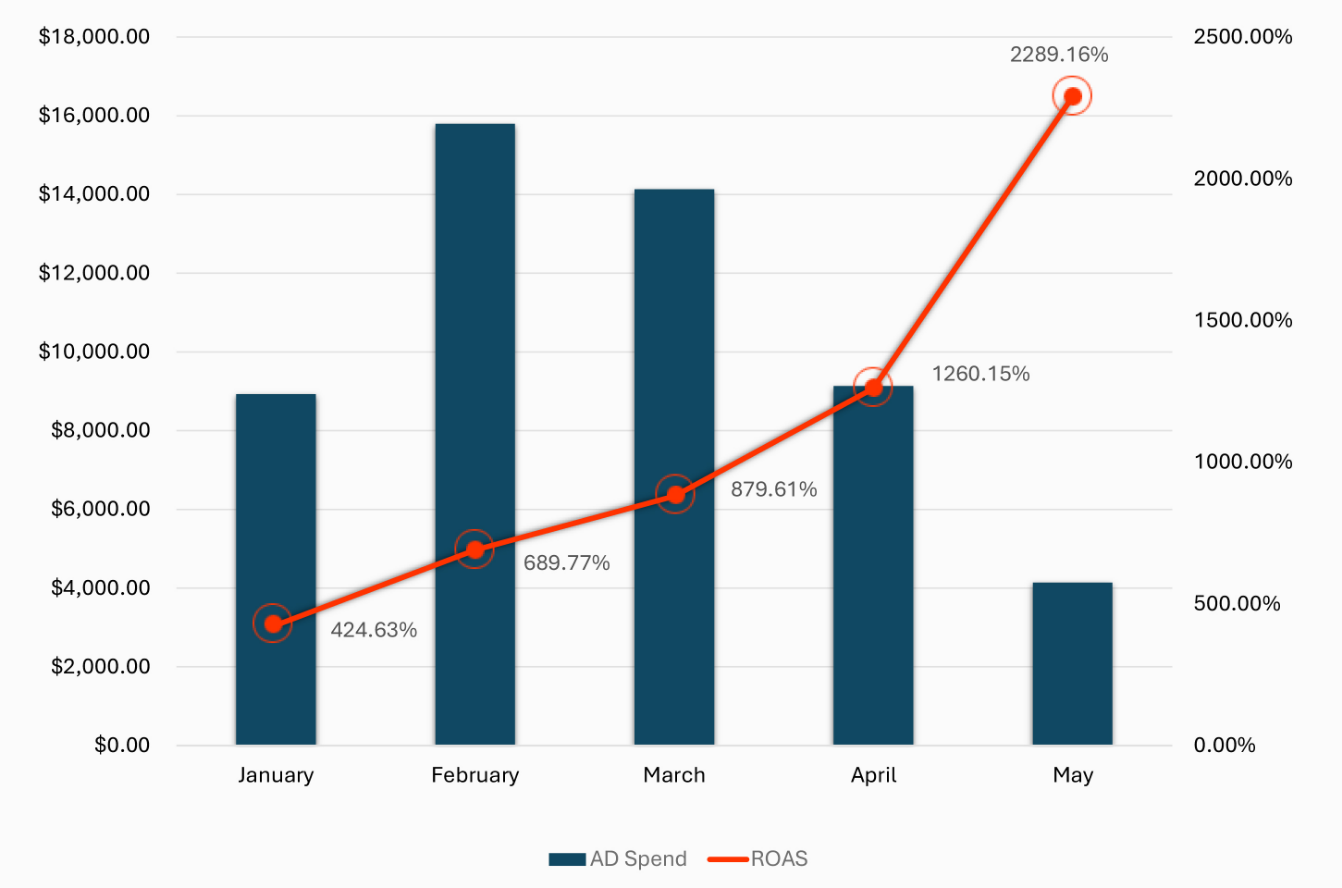
If your average commission per order is $18 and your current cost per acquisition is $12, you’re profitable. Every $12 you spend in ads is generating $18 back. In that situation, spending more makes pure mathematical sense - as long as the ratio holds.
**
The question is: does it hold as you scale?**
The answer is: sometimes, and sometimes not. Increasing daily budget on an ad set doesn’t always maintain the same efficiency. Start by increasing 20–30% at a time and watch the numbers for 5–7 days before increasing again. Aggressive scaling often breaks campaigns that were working perfectly at lower spend.
The $50/day ceiling for Sellvia specifically
Sellvia’s built-in ad system caps at $50/day. For most people starting out, this ceiling isn’t a constraint - it’s plenty. If you’re consistently profitable at $50/day and want to push beyond, you’re ready to look at running your own campaigns directly on Google or Meta, which is a separate conversation.
Where People Waste Money (Avoid These)
-
Scaling too fast out of excitement
You get three sales in two days and double your daily budget immediately. The next three days are dead. You panic and cut everything. The campaign never had time to stabilize. This cycle repeats.
Patience is not a soft skill in this context. It’s a competitive advantage. -
Buying ad add-ons before organic proof of concept
Sellvia offers various marketing packages and promotional services. Some are useful. None of them should be your first spend. Before you pay for promoted placement or professional ad creatives, you should have at least some organic evidence that your products interest people. Otherwise you’re paying to amplify something that doesn’t work. -
Running ads to an unoptimized store
If your store looks unfinished, if product descriptions feel generic, if there’s nothing that builds trust - paid traffic won’t fix that. Every dollar you spend sending people to a weak page is a wasted dollar. The store has to be solid before ads make sense. -
Ignoring the order processing cost in your math
This one is specific to Sellvia’s model and catches people constantly. Your commission comes after you process the order, which means you cover the product cost first. If you’re running ads, making sales, processing orders, AND paying for ad spend simultaneously without enough working capital, you can run out of runway fast even when “everything is working.”
Keep a clear running total of: ad spend + order processing costs vs. commissions earned. Those are your real numbers.
Realistic budget breakdown by month
Here’s what sensible ad spending actually looks like in practice for someone starting from zero:
Month 1
- Ad spend: $300-$450 total ($10-$15/day)
- Goal: data, not profit
- Expected outcome: maybe 2-5 sales, a lot of learning
- Mental state required: patience
Month 2
- Ad spend: $450–$750 total ($15-$25/day)
- Goal: identify 1-2 profitable products
- Expected outcome: consistent small sales, first profitable days
- Mental state required: analytical
Month 3+
- Ad spend: $750-$1,500/month ($25-$50/day on proven products)
- Goal: scale what’s working
- Expected outcome: consistent profitability, clearer unit economics
- Mental state required: disciplined
Total realistic investment to reach consistent profitability: $1,500–$2,700 in ad spend over 3 months, not counting subscription or order processing costs.
If that number makes you uncomfortable, organic traffic methods - Pinterest, TikTok, Facebook groups - are a legitimate alternative. They’re slower, but they’re not free either. They cost time instead of money.
Bottom Line
There’s no magic number. Anyone who tells you “$X per day guarantees results” is either selling something or has never actually run the thing themselves.
What I can tell you is that underspending in the early phase is almost always better than overspending. $10–$15/day for the first month feels frustratingly slow. But it keeps you in the game long enough to actually learn something, which is the only path to profitability.
The stores that make consistent money on Sellvia aren’t the ones that spent the most in month one. They’re the ones that spent carefully, read their data, kept their margins in check, and didn’t blow their budget before they understood what was working.
Start small. Stay in the game. Scale what the numbers tell you to scale.
 Anyone reading this - do that calculation before you touch ads, not after. Seriously will save you a lot of confusion.