Let me start with something uncomfortable.
The version of Sellvia you see in the ads is not fake. But it’s also not the complete picture. And the gap between the marketing version and the real version is responsible for more frustration, more premature quitting, and more “this is a scam” posts than any actual problem with the platform itself.
I’m not writing this to bash the marketing. I’m writing this because I wish someone had given me an honest side-by-side before I signed up. Not to talk me out of it - but to talk me into it with accurate expectations. Because what Sellvia actually is, when you understand it properly, is genuinely interesting. It just requires a different mental model than what the ads suggest.
So here it is. The marketing version vs the real version. As honestly as I can put it. 
 “Your store is ready in minutes” - What this actually means
Marketing version: Sign up, get a professional online store, start selling immediately.
Real version: Also true - but “ready” means the infrastructure is ready. The store looks great. The products are loaded. The checkout works. What isn’t ready is your audience. Nobody knows your store exists yet. “Ready to sell” and “ready to make sales” are two completely different things and the marketing blurs that line in a way that trips up almost every beginner.
The store being ready in minutes is genuinely impressive. I don’t want to undersell it. Most people who try to build an online store from scratch spend weeks on setup alone. Sellvia removes that entirely. But the moment you start expecting “store is ready” to mean “sales are coming” - you set yourself up for a week-two crisis that didn’t need to happen.
 What to actually expect: A fully functional, professional-looking store on day one. Zero visitors until you either turn on the built-in ads or drive traffic yourself.
 “Earn 50-70% on every sale” - What this actually means
Marketing version: Keep most of the money from every sale you make.
Real version: The margin is real. 50-70% is accurate. But your actual take-home per sale is that margin minus your ad spend allocated to acquiring that customer. If you spent $15 in ads to generate a sale that earns you $18 in commission - your real profit on that transaction is $3, not $18.
This isn’t a trick. It’s just how paid advertising works for any business on any platform. The commission margin tells you the ceiling of what you can earn per sale. Your cost per acquisition determines what you actually keep. Getting those two numbers to work together is the real skill.
The good news: as your ad system optimizes over time and as you build an email list of repeat buyers, your cost per acquisition drops. Which means your real margin per sale climbs toward that 50-70% number over time. But day one? The gap between the advertised margin and your actual take-home can be significant.
What to actually expect: Real margins that improve as your system matures. Not instant 70% profit on every sale from the start.
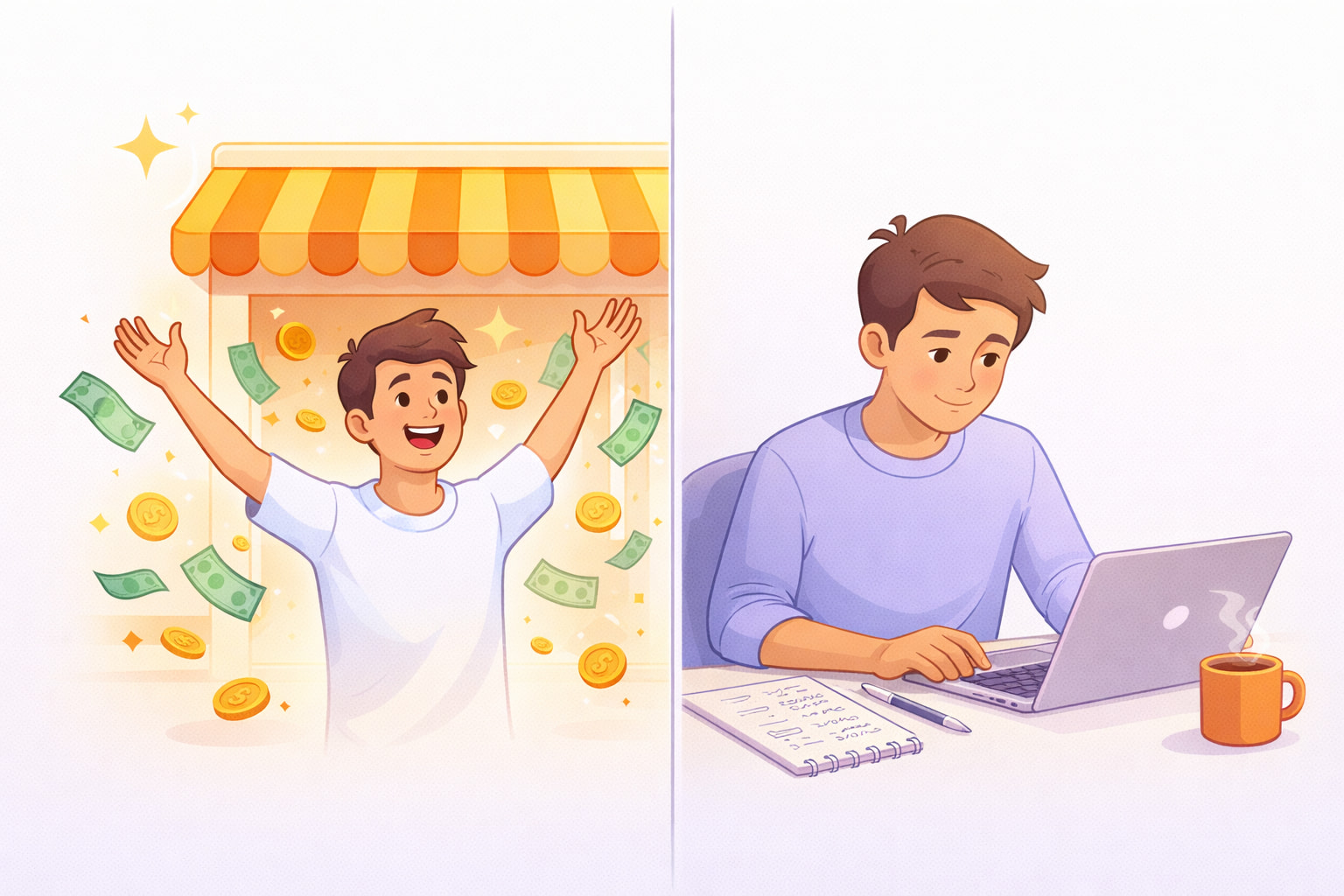
 “Turn on ads and get sales today” - What this actually means
Marketing version: Activate the built-in advertising system and watch orders roll in immediately.
Real version: Many people do get their first sale within 24-72 hours of turning on ads. This claim is not exaggerated. But “getting a sale” and “running a profitable ad campaign” are different milestones and the marketing presents them as the same thing.
Your first sale might cost you $40 in ad spend to generate. That’s not a problem - it’s a data point. The ad system needs time to learn your audience, optimize for buyers, and reduce your cost per acquisition. That process takes days to weeks depending on your budget and your niche. The first sale is proof the system works. It’s not proof the economics work yet.
The $40 ad coupon you get during trial is specifically designed to help you reach that first sale moment - to prove the concept before you’re spending your own money. Use it for exactly that. Don’t use it to try to make profit. Use it to see the system work so you know it’s real.
What to actually expect: First sale potentially within days of turning on ads. Profitable ad campaigns take longer - usually 3-5 weeks of consistent running and optimization.
 “No experience needed” - What this actually means
Marketing version: Complete beginners can succeed with zero prior knowledge of online business.
Real version: You don’t need technical experience. You don’t need to know how to code, design, source products, or set up payment systems. All of that is genuinely handled. What you do need - and what “no experience needed” quietly glosses over - is the willingness to learn how to read basic data, make decisions based on that data, and stay patient during the stretches when results are slow.
That’s not a technical skill. It’s a mindset skill. And it’s harder for most people than any technical task because it requires tolerating uncertainty without reacting to it.
The people who struggle most with Sellvia are rarely the ones who can’t figure out how to use the platform. They’re the ones who can’t figure out how to sit with a week of slow results without making a panic decision that resets their progress.
What to actually expect: Zero technical barrier to entry. Real learning curve around patience, data interpretation, and making good decisions under uncertainty.
 “Start for free” - What this actually means
Marketing version: Try Sellvia without spending anything.
Real version: The 14-day trial is real. You get a fully functional store and a $40 ad coupon at no cost. That part is accurate.
What “free” doesn’t cover is the working capital you need to process orders when they come in. When a customer buys from your store, you pay the product cost before your commission gets credited. If you have nothing in your Sellvia balance and no linked payment method ready to go - you can’t process the order and you lose the sale.
“Free to start” is true. “Free to run” is not - and the gap between those two things catches a lot of beginners off guard right when they’re most excited. Their first sale comes in during the trial and they have no way to process it.
What to actually expect: Genuinely free trial with real advertising included. Have $50-100 ready to fund your balance before you turn the ads on so you’re ready to process orders when they arrive.
 The thing the marketing can’t show you
Here’s the honest truth about why the gap between marketing and reality exists - and why it’s not necessarily deceptive.
Marketing has to communicate in seconds. A landing page or a short video cannot explain the nuance of commission economics, the emotional curve of week two, the importance of funding your balance before launch, or the difference between “store is ready” and “business is running.” It has to pick the most compelling true thing and lead with that.
The problem isn’t that the marketing lies. The problem is that the audience fills in the gaps with assumptions - usually optimistic ones - and those assumptions are what set up the disappointment.
The fix isn’t more skeptical marketing. It’s more informed customers. Which is what this forum is actually for.
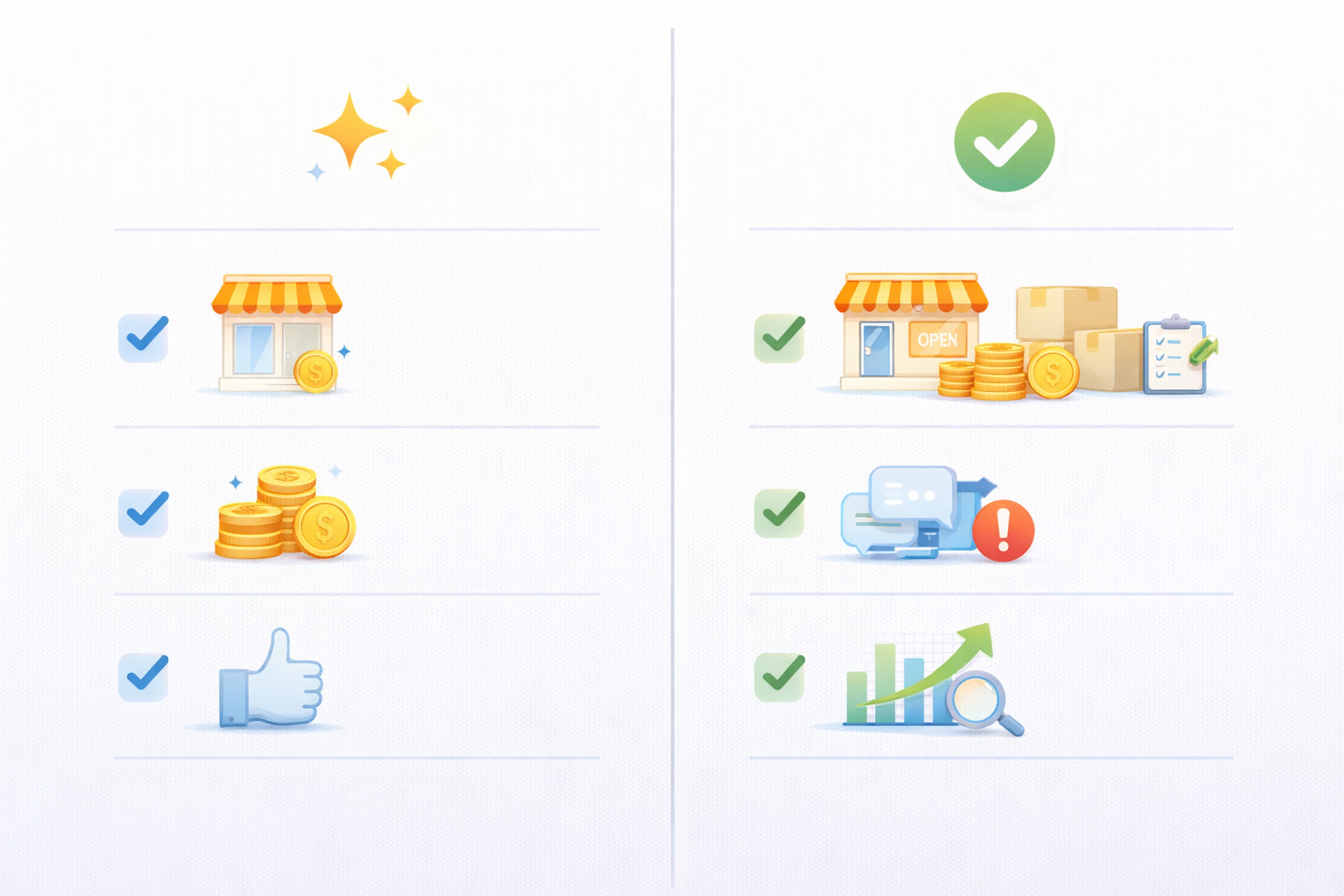
 Side by side - the real summary
What Sellvia says: “Start your online business for free.”
What that means: Free trial, real store, real products, $40 in ads included. Working capital needed to process orders.
What Sellvia says: “Earn 50-70% on every sale.”
What that means: Real margin on the product. Your actual profit depends on ad spend efficiency.
What Sellvia says: “Turn on ads and get sales today.”
What that means: Many people do get first sales fast. Profitable campaigns take consistent time to optimize.
What Sellvia says: “No experience needed.”
What that means: No technical experience needed. Patience and data literacy required.
What Sellvia says: “Your store is ready in minutes.”
What that means: Infrastructure is ready. Audience is not. Traffic is your job.
The bottom line
Sellvia is a real platform with a real business model that real people are making real money with. The marketing is not lying to you. It’s just showing you the ceiling, not the path to it.
The path to it requires funded balance, patient ad optimization, focused product selection, and enough runway to let the system actually work. None of that is secret. None of it is unreasonable. It’s just not what fits in a 30-second video.
If you went in with the marketing version of expectations and hit reality - you’re not alone and you didn’t get scammed. You just got incomplete information. This post is the rest of it.
Drop your experience below
What was the biggest gap between what you expected and what you actually found? 
Is there anything Sellvia’s marketing gets right that you want to defend?
And for anyone still on the fence - what specific claim are you most skeptical about?
Honest answers only. No hype in either direction.