Let me start with the question that’s actually behind this comparison.
“Why am I paying $39/month for Sellvia when Payhip lets me sell digital products for free?”
It’s a fair question. On paper Payhip looks like it makes Sellvia’s subscription irrelevant. No monthly fee. Sell digital products. Keep most of the money. Why would anyone choose to pay $39/month for something you can get for free?
The answer is more interesting than most people expect. And it comes down to one fundamental question that the “no monthly fee” framing completely sidesteps.
Free to use means nothing if you can’t get customers. 
 What these two platforms actually are
Before the comparison - let’s be precise about what each platform does because the difference shapes everything that follows.
Payhip is a digital product selling platform. You create an account for free, upload your own digital products - ebooks, courses, templates, whatever you’ve made - set your prices, and get a storefront link you can share. Payhip takes a 5% transaction fee on the free plan (or you can pay $29-99/month to reduce or eliminate that fee). The platform handles the payment processing and digital delivery. That’s it. Everything else - the products, the marketing, the traffic, the audience - is entirely your responsibility.
Sellvia is a complete online business platform. You get a ready-built store, a catalog of digital products already created and loaded into your store, a built-in advertising system that drives real paying customers to your store, and the commission structure that pays you 50-70% on every sale. The $39/month subscription is the rent on a fully operational system - not just a storefront.
Same category on the surface - both let you sell digital products online. Completely different level of what’s actually included.
 The “free” math - what Payhip actually costs you
The 5% transaction fee on Payhip’s free plan deserves a closer look because free platforms are rarely actually free when you run the numbers.
If you sell $1,000/month in digital products on Payhip’s free plan - Payhip takes $50. That’s more than Sellvia’s $39/month subscription already.
If you sell $2,000/month - Payhip takes $100. Nearly 3x the Sellvia subscription.
If you sell $5,000/month - Payhip takes $250.
To avoid the 5% fee you upgrade to Payhip’s Plus plan at $29/month or Pro plan at $99/month. At which point you’re paying a monthly subscription anyway - just with fewer features than Sellvia provides at $39/month.
The “no monthly fee” framing is a hook not a business model analysis. Run the actual numbers for your expected volume and the math looks very different.
But here’s the real issue - and it’s not about the fee at all.
 The traffic problem - why free platforms aren’t actually free
This is the part of the Payhip vs Sellvia comparison that almost nobody talks about and it’s the most important part.
Payhip gives you a storefront. It gives you payment processing. It gives you digital delivery. What it does not give you - and cannot give you - is customers.
To make money on Payhip you need:
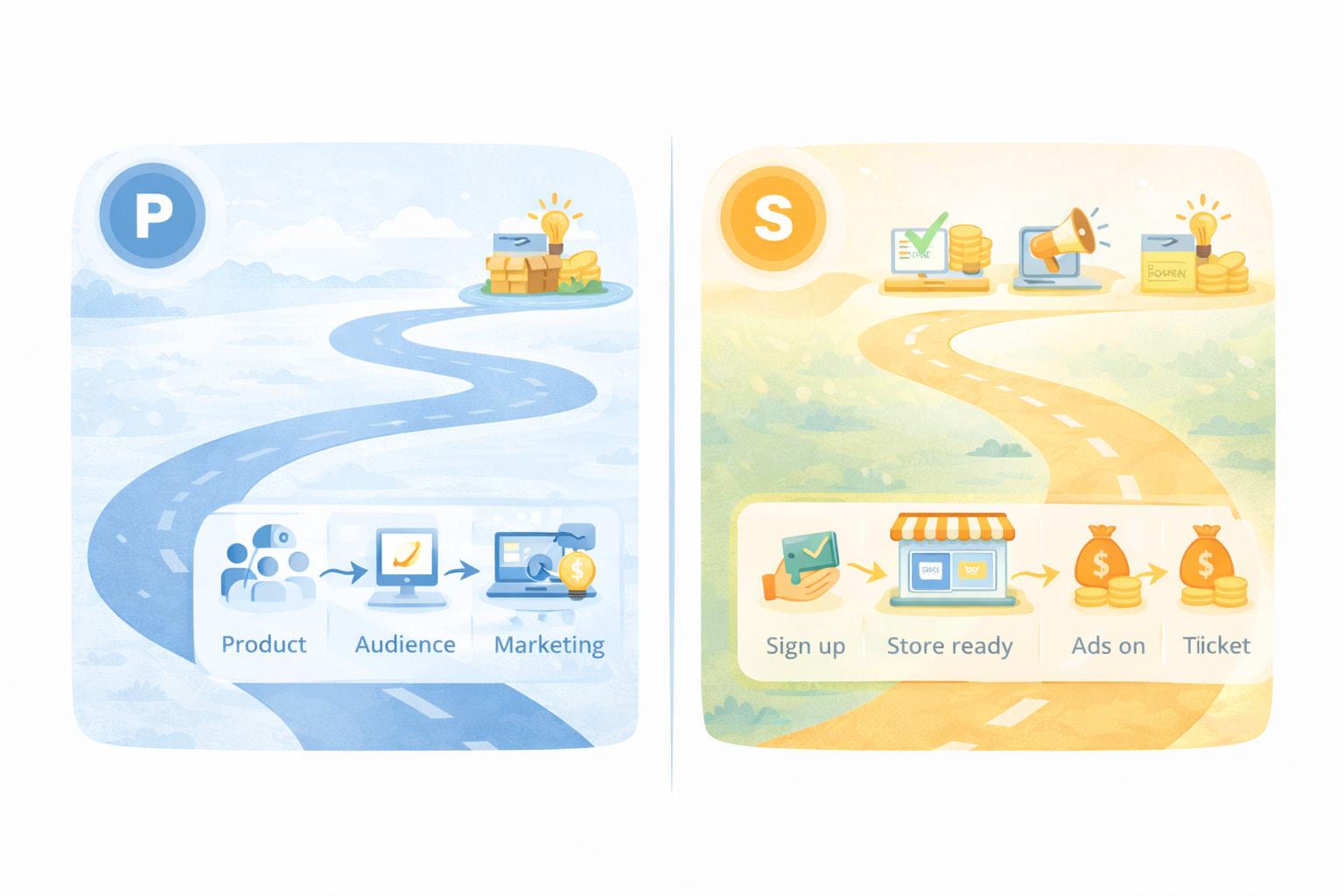
Your own digital products. Payhip is a platform for selling things you create. If you don’t have an ebook, a course, a template pack, or some other digital product you’ve made - you have nothing to sell. Creating quality digital products that people actually want to buy takes significant time, skill, and often money. Most beginners don’t have existing digital products to sell.
Your own audience. Payhip has no built-in marketplace or discovery mechanism. Nobody goes to Payhip.com to browse products the way they go to Amazon or Etsy. Your Payhip storefront link generates zero traffic on its own. You need an existing email list, social media following, blog audience, YouTube channel, or some other established traffic source to send to it.
Your own marketing. If you don’t have an existing audience you need to build one or pay for advertising. Building an organic audience takes months to years. Paying for advertising requires knowing how to run ads - Facebook, TikTok, Google - each of which is a real skill with a real learning curve and a real budget requirement.
So the real cost of Payhip for a beginner with no existing audience and no existing digital products is not 5% or $29/month. It’s the months of time to create products plus the months of time to build an audience plus the hundreds or thousands of dollars in advertising to acquire customers. That’s the true entry cost of the “free” platform.
Sellvia’s $39/month buys you the thing Payhip cannot provide: a functioning traffic system. The built-in Sellvia Ads system drives real paying customers to your store from day one. You don’t need an existing audience. You don’t need to create products. You don’t need to know how to run advertising campaigns. You turn on the ads, set a budget between $10 and $50 per day, and the system handles the rest.
 The product creation problem
Let’s talk about what you’re actually selling on each platform because this is where the comparison gets most lopsided for beginners.
On Payhip: You sell your own digital products. This sounds great until you actually sit down to create one. A quality ebook that sells well typically requires 10,000-30,000 words of well-researched, well-edited content. A course requires video production, course structure design, platform setup, and ongoing student support. A template pack requires design skills and professional tools. Any of these done properly takes weeks to months of real work - and then still needs to be marketed to an audience that doesn’t exist yet.
Most beginners who sign up for Payhip with the intention of selling digital products never actually launch anything. The product creation barrier is real and it’s significant.
On Sellvia: You sell from a pre-built catalog of professionally created digital products - guides, courses, checklists, tools - that are already loaded into your store and ready to sell from day one. You don’t create anything. You curate. You pick the products that match your audience, position your store around a focused category, and let the advertising system bring buyers to them.
The difference in time-to-launch is not marginal. It’s weeks vs hours.
 Head to head - the real comparison
Let’s put the key differences in one place.
Getting started:
Payhip - create account in minutes, then spend weeks or months creating products and building an audience before making a single sale.
Sellvia - create account, store is ready, products are loaded, turn on ads, potential first sale within days.
Products:
Payhip - you create everything from scratch. Full creative control. Full time investment.
Sellvia - professionally created catalog ready from day one. No creative work required.
Traffic:
Payhip - entirely your responsibility. No built-in system. No marketplace discovery. You bring every single visitor yourself.
Sellvia - built-in advertising system drives real traffic from day one. No marketing expertise required.
Monthly cost:
Payhip free plan - $0/month but 5% transaction fee plus your full advertising and marketing costs.
Payhip paid plans - $29-99/month plus your full advertising and marketing costs.
Sellvia - $39/month plus ad spend ($10-50/day) with the traffic system included.
Who it’s built for:
Payhip - creators who already have an audience and want a simple way to monetize their existing digital products.
Sellvia - beginners who want to start earning commissions from digital products without creating products or building an audience from zero.
 Who should actually choose Payhip
Fair is fair. Payhip is genuinely the better choice for a specific type of person.
If you already have an established audience - email list, YouTube channel, Instagram following, blog readership - and you’ve created quality digital products you want to sell to that audience, Payhip is a perfectly solid platform. Low friction, low cost at low volume, simple setup. It does exactly what it claims to do for the person it’s designed for.
The problem is that person is not a beginner. That person has already done the hard work of building an audience and creating products. Payhip is the last 10% of their journey - the checkout and delivery mechanism. It’s not a business model by itself.
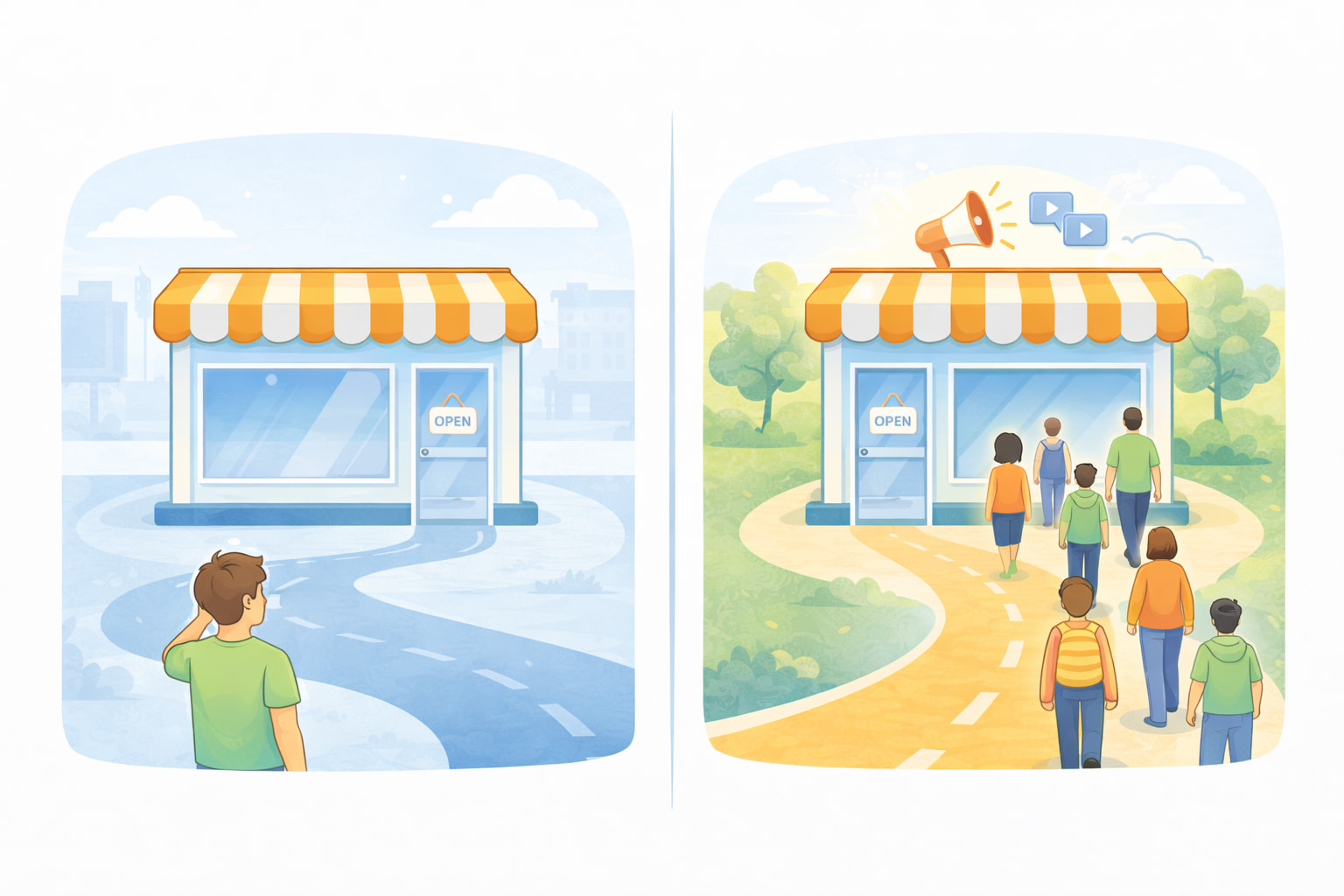
For someone starting from zero - no audience, no products, no marketing experience - Payhip is an empty storefront on a street with no foot traffic. Technically functional. Practically useless until you solve the audience problem that Payhip cannot solve for you.
 The bottom line - what $39/month actually buys you
When someone compares Sellvia to Payhip and says “why pay $39/month when Payhip is free” - they’re comparing the wrong things.
They’re comparing subscription fees. They should be comparing total systems.
Payhip’s free plan gives you a checkout page. Sellvia’s $39/month gives you a ready-made store, a professional digital product catalog, and a built-in advertising system that can put paying customers in front of your store within hours of signing up.
For a creator with an existing audience selling their own products - Payhip is a smart, low-cost tool.
For a beginner who wants to start earning commissions from digital products without creating products, without building an audience from scratch, and without learning digital advertising from zero - Sellvia is not competing with Payhip. It’s solving a completely different problem.
The $39/month is not a subscription fee for a storefront. It’s a subscription fee for a complete business infrastructure that removes the three hardest barriers to entry in digital product selling - product creation, audience building, and customer acquisition.
That’s what you’re buying. And when you frame it that way the comparison isn’t really close. 
Drop your experience below
Has anyone here used Payhip before coming to Sellvia - what made you switch? 
For anyone who’s tried to sell their own digital products with no existing audience - how did the traffic problem actually play out?
And for anyone currently comparing these two - what’s the specific thing you’re trying to decide on?
Honest experience from both sides welcome.

