So… How Much Does Sellvia Actually Cost? (Let’s Stop Pretending It’s Just $39)
Every time someone says:
“Sellvia is only $39/month.”
I kind of smile.
Because yes - technically true.
But if you’re actually running it, you already know $39 is just the entry ticket.
Let’s walk through the real money flow.
Not the marketing version.
The real one.
The $39 Subscription (That Never Pauses for Your Losses)
Here’s the base plan:
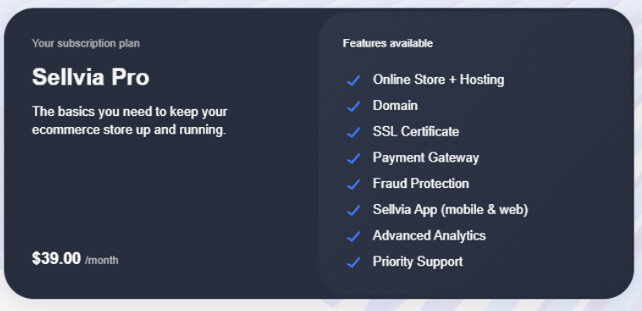
$39/month.
Not crazy.
Not outrageous.
But here’s the thing nobody emotionally prices in:
If your ads are bleeding?
Still $39.
If you’re testing products and nothing converts?
Still $39.
If you pause everything because you’re rethinking strategy?
Still $39.
It’s a fixed meter running in the background.
Small? Yes.
Invisible pressure? Also yes.
Then Processing Hits. Every. Single. Order.
Let’s talk payment fees.
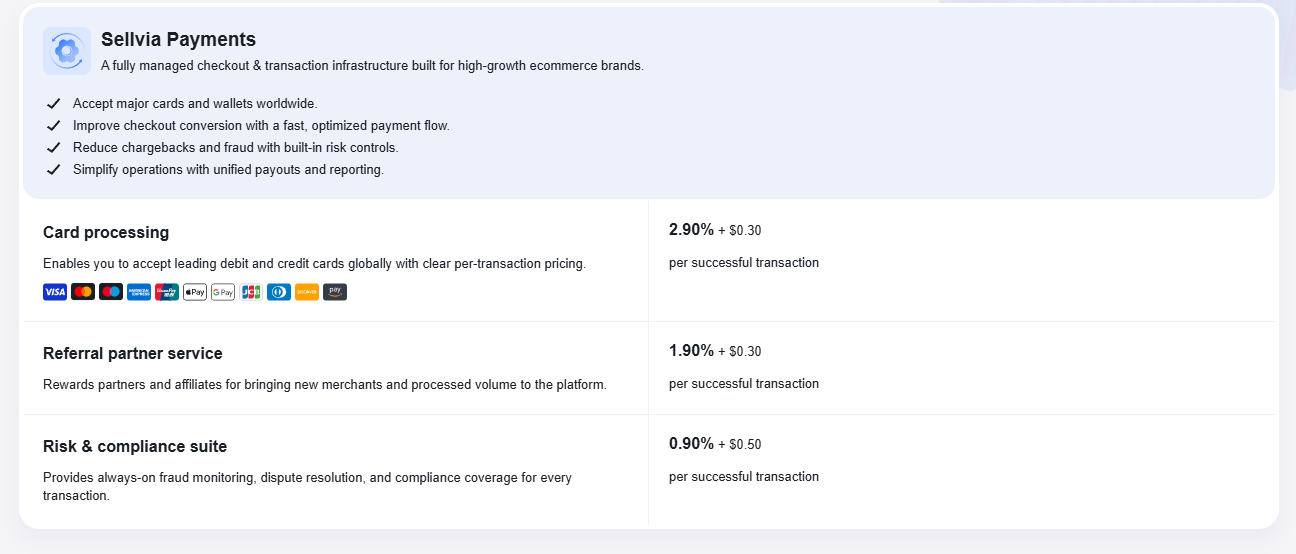
2.90% + $0.30 per transaction.
Standard ecommerce stuff.
But here’s where beginners mess up.
They think:
Sell $49
Product $25
Profit $24
Nope.
Now subtract:
~$1.70 payment processing
Maybe risk/compliance layer
Maybe minor extra services
Your $24 margin just became $22-ish.
That doesn’t sound scary.
Until ads enter.
The Weekly Tiers Nobody Mentally Converts
This one is important.
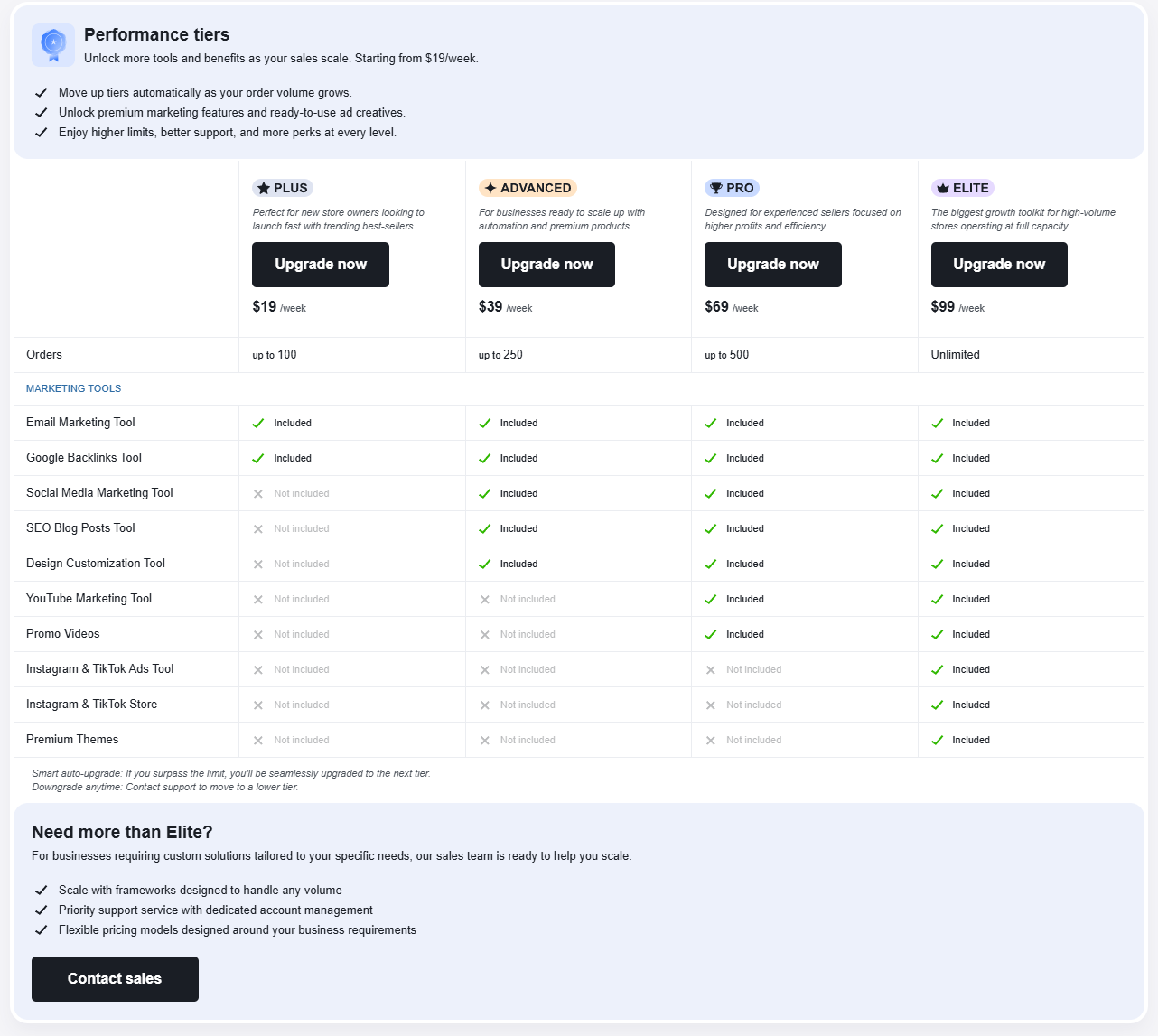
Look closely.
Per week.
Not per month.
$19/week = ~$76/month
$39/week = ~$156/month
$69/week = ~$276/month
$99/week = ~$396/month
And that line:
Smart auto-upgrade if you surpass the limit
Translation:
If you grow, you pay more.
Is that logical? Sure.
Is it emotionally obvious when you sign up? Not really.
What happens is:
You start getting traction.
You feel momentum.
Then your cost base quietly increases too.
Now your growth curve isn’t as profitable as you imagined.
That’s not a scam.
That’s structure.
But structure feels different when it hits your bank account.
The Transactions View: What You’re Actually Paying For
If you open the Transactions section, you’ll see something like this:
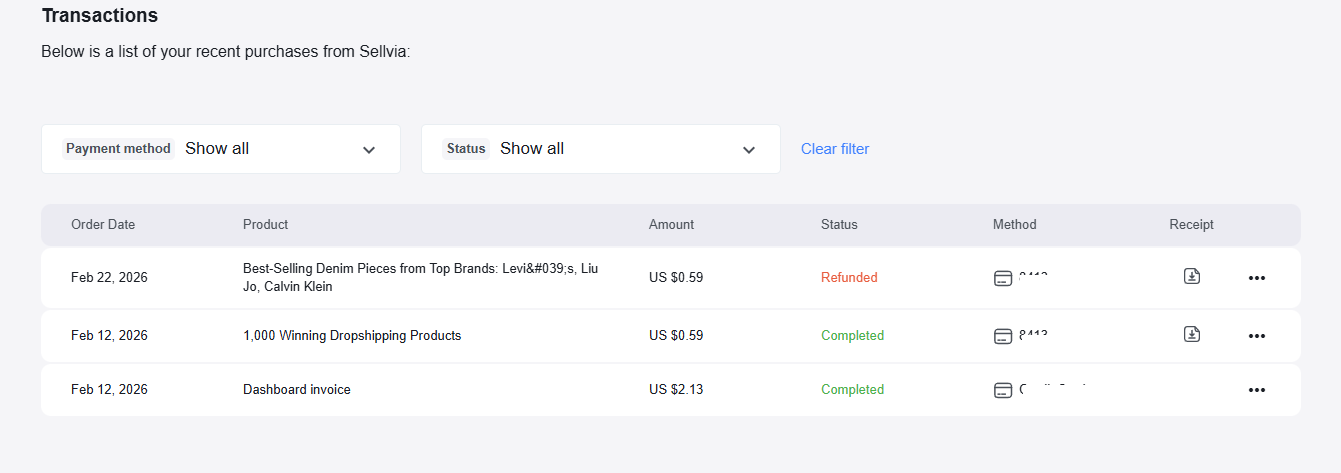
What’s there?
-
Subscription-related invoices
-
Product purchases
-
Completed and refunded items
-
Platform service charges clearly labeled
Nothing mysterious.
No ghost withdrawals.
No unexplained deductions.
But here’s why this section still matters.
Most people don’t track this monthly.
They focus on:
Revenue
Ad spend
And ignore the backend breakdown.
The Transactions tab forces you to see the full picture:
What was paid
When it was paid
What it was for
Individually, most of these charges make sense.
The issue isn’t “hidden fees.”
The issue is that many users never add everything together.
And when they finally do, the total operating cost feels higher than expected.
Not because anything was secretly taken.
But because they never built a full cost model from the start.
The $1 Offer That Becomes $69
The $1 Offer That Becomes $69
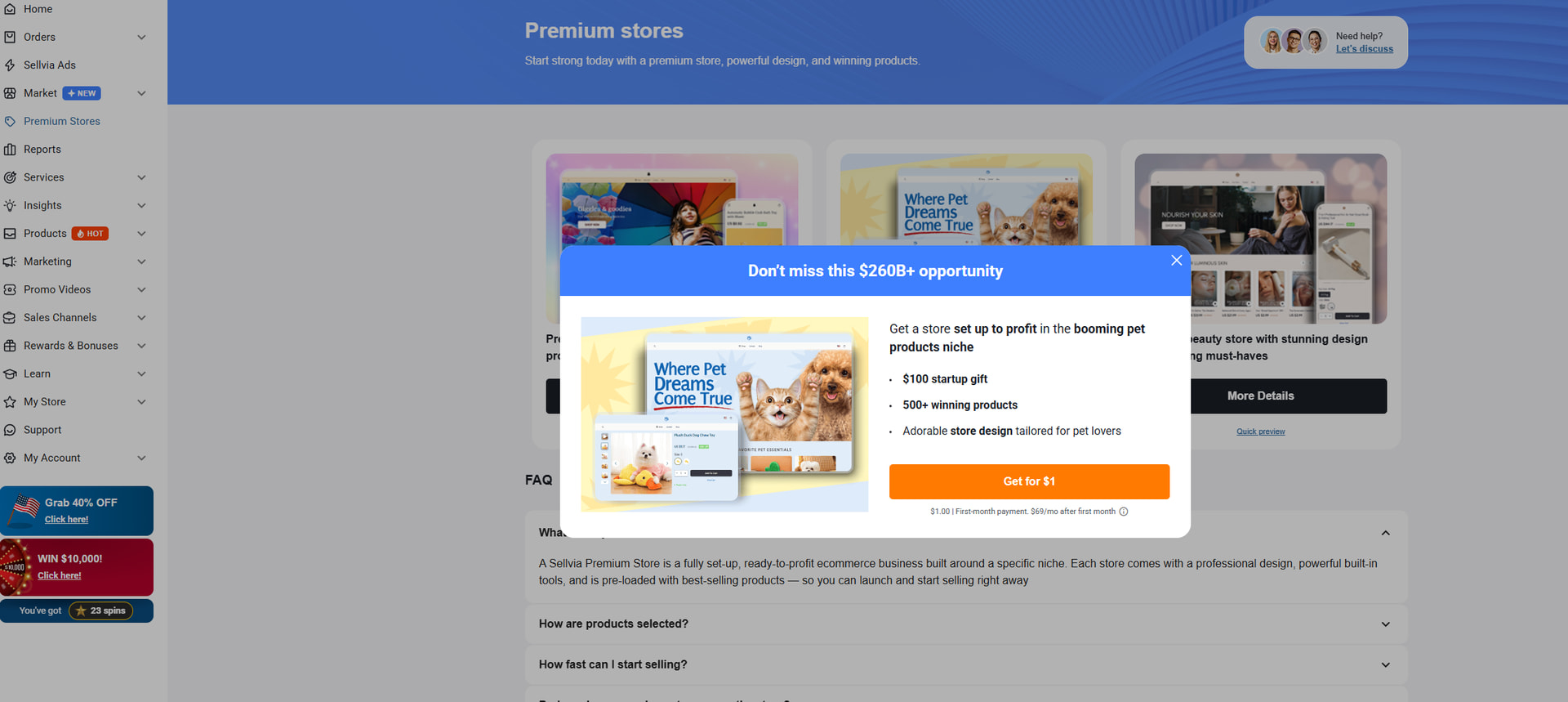
“Get for $1”
And in smaller text:
$1 first month
$69/month after
This is normal subscription marketing.
Netflix does it.
SaaS companies do it.
But here’s the issue:
People anchor to $1.
Then month two hits.
Then the narrative becomes:
“They tricked me.”
No - it was disclosed.
But disclosed ≠ fully internalized.
That’s a big difference.
Where People Actually Start Losing Money
It’s not the subscription.
It’s not the tiers alone.
It’s when everything stacks at the same time.
Let’s simulate something realistic.
Sell price: $49
Product: ~$25
Processing: ~$1.70
Now you’re around $27 cost.
Gross margin: ~$22.
Now ads.
If CPA is:
$15 → nice
$20 → tight
$25 → you’re sweating
$30 → you’re negative
Now add:
Refund rate 7-10%
Creative fatigue
Tier increase
Subscription
Suddenly your “this looks easy” model feels fragile.
That fragility is what people interpret as:
“Hidden cost.”
But it’s really thin margin math + layered fees.
The Real Sellvia Cost Isn’t $39
The real Sellvia cost is:
$39 base
-
tier level
-
processing erosion
-
ad volatility
-
upsell tools
-
refunds
In other words:
It’s an ecosystem.
And ecosystems are more expensive than landing pages make them look.
So Are There Hidden Fees?
No secret charges appeared on my dashboard.
Everything is documented somewhere.
But here’s the truth nobody says directly:
If you don’t read every layer,
and you don’t calculate full-stack cost before running ads,
it will feel like hidden fees.
Because your expected profit won’t match your actual net.
And when expectations break, trust gets shaky.
Who Actually Handles This Model Well?
People who:
Track CPA daily
Track refund ratio
Convert weekly tiers into monthly math
Read renewal terms
Treat this like cash flow engineering
Not people looking for:
“Set it and forget it.”
Because this isn’t passive income.
It’s leveraged margin trading with ads.
Final Straight Answer on Sellvia Pricing
Sellvia isn’t cheap.
Sellvia isn’t overpriced.
It’s layered.
And if you ignore the layers, it will punish your math.
If you understand the layers, it’s just structured ecommerce.
The problem isn’t “hidden fees.”
The problem is unrealistic margin expectations.