I want to write the post that nobody writes because it makes the platform look complicated.
Most cost breakdowns for Sellvia stop at month one. “Here’s your subscription, here’s your ad spend, here’s your processing balance - total around $400-600 to get started.” That’s accurate for month one. It’s incomplete for month six, month twelve, and beyond. And the gap between month one costs and long-term costs is where a lot of people get surprised in ways they didn’t need to be surprised.
I’ve been running a Sellvia store for fourteen months. I’ve kept detailed records of every dollar in and out since month two when I realized I didn’t actually know if I was profitable. That mistake - not tracking properly in the beginning - cost me a couple of months of clarity I could have had for free if I’d set up a simple spreadsheet on day one.
This post is the complete long-term cost picture. Not to scare anyone off - the numbers work if you understand them. But they only work if you understand them. Going in blind is how people end up writing frustrated Sellvia reviews that say “I spent way more than I expected and didn’t make what I hoped.” The platform isn’t hiding these costs. Most people just never add them all up until they’re already in it.
Let’s fix that. 
The cost categories nobody talks about after month one
Before getting into numbers, let’s name every category of cost that exists in this model over a twelve-month period. Most discussions - including most honest Sellvia reviews - cover two or three of these. All of them are real.
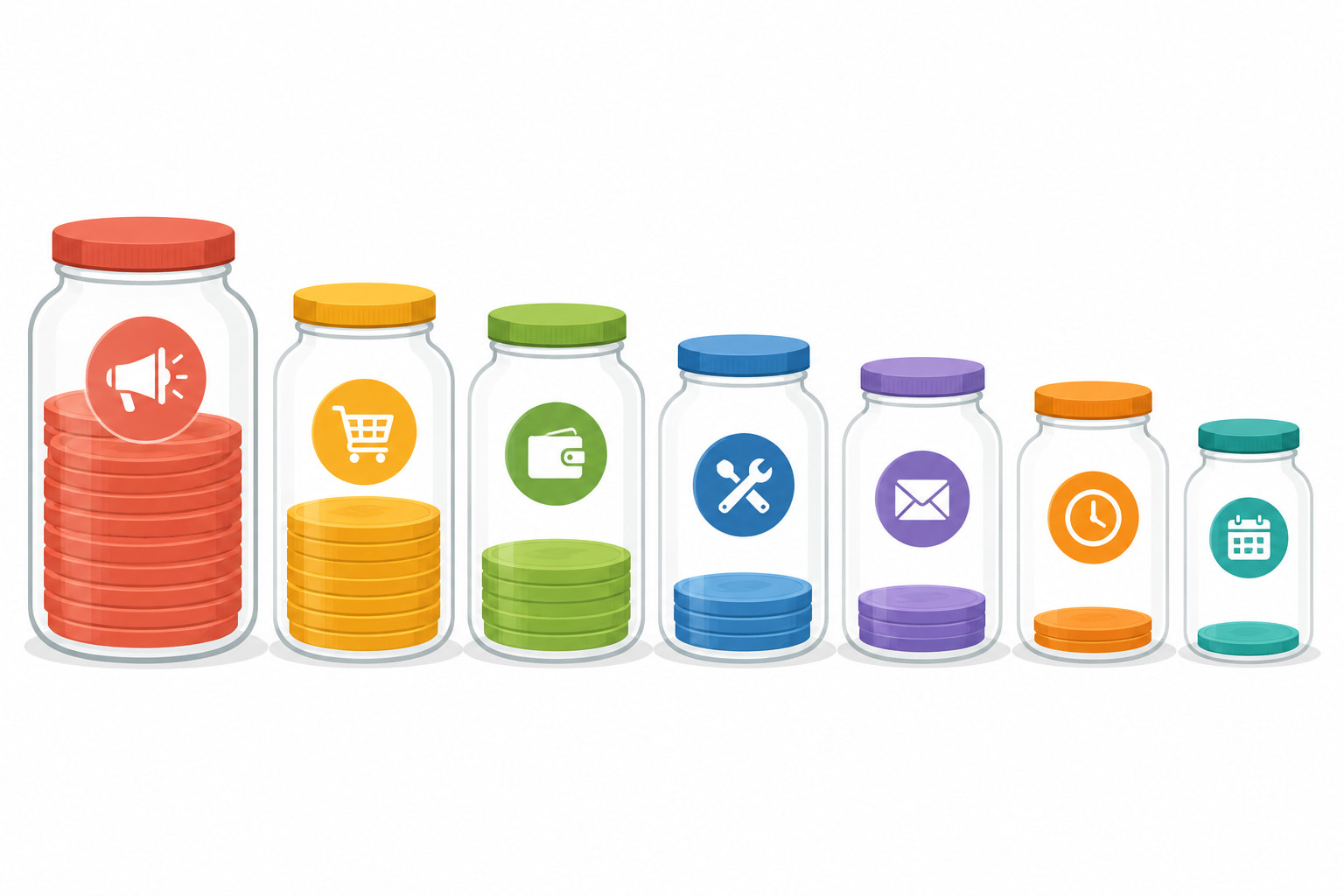
Fixed platform costs. The subscription fee. Predictable, recurring, never goes away as long as you’re on the platform.
Advertising costs. The daily ad spend through Sellvia Ads. Technically variable but effectively fixed if you’re running the business properly - you’re running ads every day.
Order processing costs. The product cost you pay before your commission is credited on each sale. Scales with volume. Often misunderstood as a net expense when it’s actually a component of a profitable transaction.
Working capital requirements. The float you need to maintain in your Sellvia balance to ensure orders process automatically without interruption. Not permanently spent but must be available.
Optional platform upgrades. Domain upgrades, product packs, SEO packages, the Premium Business Upgrade. None required. All have real ROI implications if you understand what they do.
External tools. Email marketing platform, analytics tools, content creation software. Small individually, meaningful in aggregate over twelve months.
Time cost. Not a dollar figure but a real cost. Fourteen months in I can tell you that the time requirement changes significantly from month one to month twelve - and understanding that curve in advance changes how you plan.
Now let’s put actual numbers on all of them across a realistic twelve-month timeline.
Month 1-3: The expensive learning phase
The first three months are the most expensive months relative to revenue. This is true for every business model and Sellvia is no exception. Understanding why helps you plan properly instead of panicking when the early numbers don’t look like you expected.
Subscription: $39/month
$117 over three months. The most predictable number in the entire model. If your Sellvia Payments balance has enough from commissions, it auto-deducts from there. If not, it charges your card. Either way it’s $39 and it never changes.
Advertising: $300-600/month
At $10/day (Bronze package) you’re spending $300/month on ads. At $20/day (Gold package) it’s $600/month. Most serious beginners land somewhere between those two numbers. Over three months at the $15/day midpoint - $450/month - you’re looking at $1,350 in ad spend before the system is properly optimized.
This is the number that surprises people most in the first Sellvia review they mentally write of their own experience. The subscription is $39. The ads are $450. Those are very different numbers and the marketing leads with the smaller one.
Processing costs: variable but manageable
At 20 orders per month with an average product cost of $10, you’re paying approximately $200/month in processing costs. But here’s the critical distinction: those $200 in processing costs are generating roughly $400-450 in commissions. The processing cost isn’t a loss - it’s the cost of goods on a profitable transaction. Your net from this category at 20 sales per month is approximately +$200-250.
Working capital buffer: $150-200 one-time
You put this in your Sellvia balance before launch and it stays there, cycling through as orders come in and commissions accumulate. It’s not spent - it’s working capital. But it needs to exist or orders don’t process automatically.
Month 1-3 honest total spend: approximately $1,800-2,400
Including subscription, ads at $15/day, processing costs net of commissions, and initial working capital. This is the real tuition cost for learning the model. The commission income during this period is typically $400-800 as the ad system optimizes and order volume builds, so your net cash out the door in months one through three is approximately $1,000-1,800.
That’s a real investment. It’s not a scam and it’s not a failure - it’s what any online business costs to test properly. But it’s a number you should know going in, not discover while you’re in it.
Month 4-6: The optimization phase - where the math starts working
If you’ve done the fundamentals correctly in months one through three - consistent ad spend, products in a focused niche, orders processed promptly - month four is when the economics of the model start shifting in your favor.
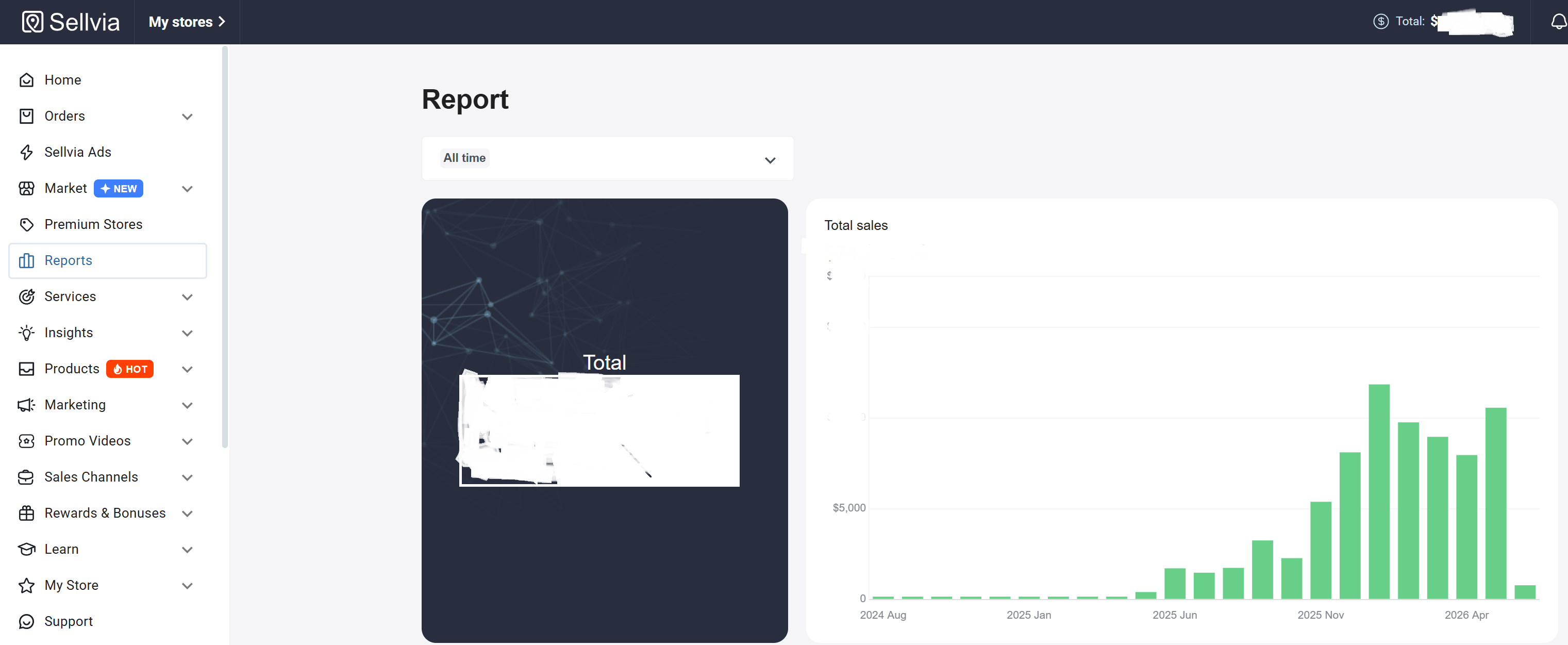
Here’s what changes and why.
Ad cost per acquisition drops. The Sellvia Ads algorithm has now accumulated several months of purchase data specific to your store and your niche. It’s significantly better at finding buyers than it was in month one. The same $15/day budget that was generating 15-20 sales per month in month one is now generating 25-35 sales per month in month four. Same spend, more revenue. That’s what algorithm optimization looks like in practice.
Email list starts contributing. If you built an email list from day one - which every honest Sellvia review recommends and most beginners delay until month three or four - your repeat buyer traffic is starting to generate real volume by month four or five. Repeat buyers cost you essentially nothing to acquire. Their commission margin is nearly pure profit. A list of 200-300 engaged subscribers generating 8-12 sales per month is adding $100-150 in near-zero-cost commission to your monthly revenue.
Subscription still $39/month. This fixed cost now represents a smaller percentage of your total revenue as volume grows. The milestone most people celebrate - and should celebrate - is the first month where commissions cover the subscription fee automatically. For stores running consistent ads this typically happens somewhere in month two or three. By month four or five it’s usually a non-issue.
Month 4-6 realistic cost picture:
Subscription: $117 (three months)
Ads at $15/day: $1,350
Processing costs net of commissions: approximately -$300 net positive as volume increases
Email tool: $0-45 depending on list size and platform
Total net spend months 4-6: approximately $1,100-1,200
Commission income during this period for a well-optimized store: approximately $1,200-2,000
First time in the model’s timeline where monthly revenue consistently exceeds monthly costs. For most stores that crossover happens somewhere in month four or five.
Month 7-12: The compounding phase
This is where running a Sellvia store stops feeling like spending money to test something and starts feeling like operating a real business with improving economics over time.
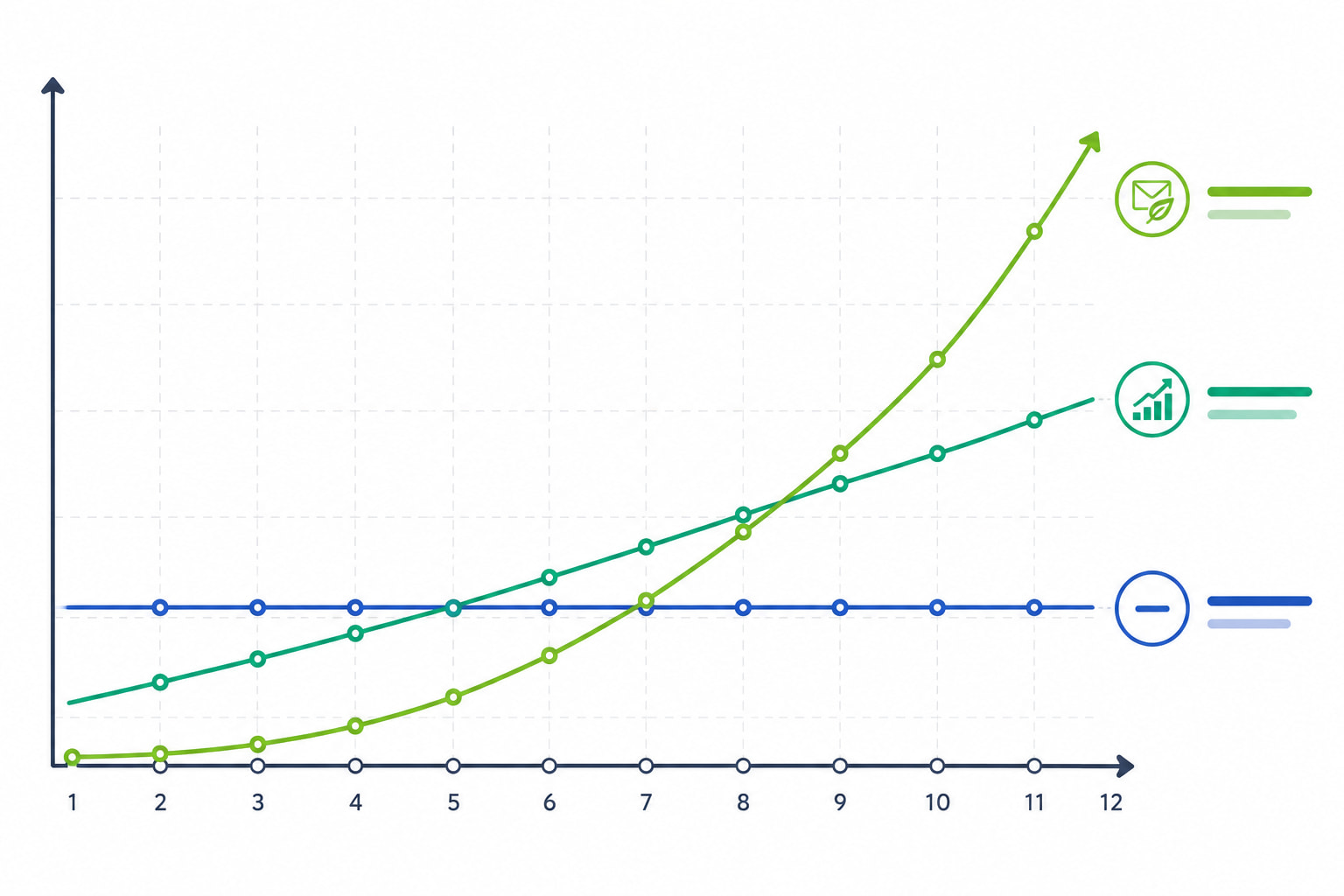
Three things compound during this period that don’t show up in month-one cost analyses.
Organic traffic reduces your effective ad cost per sale. If you invested in the SEO package around month two or three, you’re now seeing meaningful organic search traffic by month six or seven. By month nine or ten, organic might represent 15-25% of your total store traffic. Every organic visitor who converts is a sale with zero ad cost attached to it. At a 50-70% commission margin on digital products, those organic sales are significantly more profitable than paid traffic sales. Your blended cost per acquisition drops every month as the organic share grows.
Repeat buyers from email continue compounding. A list that was generating 10 sales per month in month four is generating 20-25 sales per month in month ten if you’ve been consistent about building it. Those buyers already know your store. They already trust the products. The email that generates a sale costs you almost nothing to send. This is the lever that most beginners underestimate and most experienced Sellvia operators credit as the biggest driver of long-term profitability.
Your understanding of what works reduces wasted spend. By month seven you know which products in your catalog convert consistently for your specific audience. You know which price points perform. You know what your average cost per acquisition looks like and what deviation from that number means. You stop spending money on tests that aren’t tests - you’re running a real optimization loop with real data. The ad spend that used to feel like guessing feels like investing because you understand the expected return.
Month 7-12 realistic cost picture:
Subscription: $234 (six months)
Ads at $15-20/day average: $2,700-3,600
Processing costs net of commissions: positive contribution as volume grows
Email tool at paid tier: $60-120
Optional SEO package (if not already purchased): $200-400 one-time
Total spend months 7-12: approximately $3,200-4,400
Commission income for a well-run store in this period: approximately $4,000-8,000+
Net positive for the first time on a six-month rolling basis. The model is working.
The full twelve-month picture
Let me put the entire year in one place so you can see what you’re actually signing up for when you start a Sellvia store.
Total twelve-month costs for a store running $15/day in ads consistently:
Subscription (12 months): $468
Advertising ($15/day x 365): $5,475
Working capital buffer (one-time): $150-200
Email tool (free months 1-3, paid after): $90-120
Optional SEO package: $200-400
Processing costs net of commissions: approximately neutral to slightly positive
Total twelve-month investment: approximately $6,400-6,700
Total twelve-month commission income for a well-run store:
Conservative estimate (stores that are working but not scaling aggressively): $6,000-9,000
Moderate estimate (consistent optimization, email list built, some organic traffic): $9,000-15,000
Strong estimate (scaled ad spend by month six, significant email and organic contribution): $15,000-25,000+
The range is wide because the variable that matters most - how well you execute the marketing and optimization side - is entirely in your hands. The platform costs are fixed and predictable. The revenue is not.
What is predictable is the direction. A store that’s properly set up and consistently managed gets more efficient over time, not less. Your cost per acquisition drops. Your organic traffic grows. Your email list compounds. The same $15/day ad budget generates more revenue in month twelve than it did in month one because everything else in the system has matured around it.
The costs people consistently forget to include
After reading through enough Sellvia reviews and forum posts to have a clear picture of where the surprise costs come from, there are five specific items that catch people off guard repeatedly.
The $40 coupon running out faster than expected. At $10/day the coupon covers four days of advertising. Four days. Most people mentally treat it as “free advertising for a couple weeks” and are surprised when it runs out. Budget for real ad spend from day five onward regardless of what the coupon does for you before that.
Processing float growing with volume. When you’re doing five orders per month the processing balance requirement is modest. When you’re doing forty orders per month you need significantly more float in your Sellvia balance to handle automatic processing without running dry mid-month. Scale your working capital as your volume scales or you’ll hit processing bottlenecks right when things are going well - which is the worst possible time to have a mechanical problem.
The gap between first commission and first withdrawal. The risk reserve period means your first commissions aren’t immediately withdrawable. The $100 minimum threshold means small early balances sit inaccessible. The practical implication is that your first withdrawal typically comes four to six weeks after your first sale, not immediately. During those four to six weeks your costs continue. Budget for that gap explicitly.
Email marketing costs at scale. Starting on Klaviyo or Mailchimp free tier costs nothing. Growing past the free tier threshold costs $15-30/month. That’s not a meaningful cost in isolation - but it’s a cost that doesn’t appear in any first-month breakdown and surprises people when it shows up in month four or five when the list has grown enough to require a paid tier.
The psychological cost of the slow start. Not a dollar figure. But real. The first sixty to ninety days require spending money without proportional returns. Most people’s honest Sellvia review of their own experience, if they wrote it at day forty-five, would be “I’ve spent more than I expected and made less than I hoped.” By day ninety that review looks completely different. The cost of not knowing this in advance is that people quit at exactly the wrong moment.
What the numbers look like if you scale
Everything above assumes a store running $15/day consistently throughout the year. That’s a conservative, learn-the-model budget. What happens if you scale once the economics are confirmed?
At $30/day ads (Platinum package) your monthly ad spend is $900. Your expected order volume at a properly optimized stage is roughly double what it was at $15/day. Your commissions scale proportionally. Your fixed costs - subscription, email tool - don’t scale at all. Which means scaling ad spend is the most efficient way to grow revenue in this model once you’ve confirmed your unit economics.
The rule most experienced operators follow: don’t increase ad spend by more than 25-30% at one time. Give the algorithm five to seven days to recalibrate at the new budget level. Increase again. Repeat. Doubling overnight almost always breaks the optimization the system has built up and you spend a week recovering performance you already had.
At $50/day (Ultimate package) the monthly ad spend is $1,500. The stores running at this level and maintaining positive unit economics are typically generating $5,000-10,000/month in commissions. The subscription cost at that revenue level is genuinely irrelevant - it’s less than 1% of monthly revenue. The math looks completely different from the month-one perspective but it’s built on top of the same foundation.
The build-and-sell angle changes the entire cost calculation
Here’s the piece of the long-term cost picture that almost nobody includes in a standard breakdown because it requires thinking about the business as an asset rather than as a monthly income stream.
Sellvia Market lets you sell your entire store after sixty days of operation. A buyer purchases your store, your domain, your product catalog, your revenue history, your customer relationships. You receive cash - either as a lump sum or as installments over twelve to forty-eight months.
What this means for your cost calculation: every dollar you invest in the store - domain upgrade, SEO package, Premium Business Upgrade, product packs, consistent ad spend that builds revenue history - isn’t just a cost. It’s an investment in the eventual sale price of an asset.
A store with six months of revenue history, a premium domain, organic search traffic, and an established email list is worth significantly more to a buyer than a store with a generic subdomain, no SEO, and all traffic coming from paid ads. The difference in sale price more than covers the cost of those upgrades.
If you build with the exit in mind from month one, the long-term cost calculation changes completely. You’re not asking “is this monthly spend worth it.” You’re asking “does this investment increase my sale price by more than it costs.” The answer to that question, for most of the upgrades Sellvia offers, is yes - if you actually use them properly.
The honest twelve-month verdict
Here’s what fourteen months of detailed cost tracking tells me about whether running a Sellvia store long-term is worth it financially.
The first three months are expensive relative to returns. That’s unavoidable and it’s the same for any business model that requires learning. Treat it as tuition and budget for it explicitly before you start.
The break-even point - where cumulative commissions exceed cumulative costs - typically comes somewhere between month four and month seven for stores that are running consistently. Stores that quit before month four never reach it. Stores that push through do.
After month six the model’s economics improve every month as the algorithm matures, the email list compounds, and organic traffic builds. The stores that look unsustainable at month two look very different at month eight.
The biggest financial risk in this model isn’t the subscription. It isn’t even the ad spend. It’s quitting before the compounding becomes visible - which is almost always before month four and almost always driven by expectation mismatch rather than fundamental model failure.
Know the real numbers before you start. Run the model long enough for those numbers to work. The math is there. You just have to give it time. 
Drop your experience below
What was your actual cost in month one versus what you expected going in?
At what month did your costs and commissions finally cross over into net positive territory?
And for anyone currently in the first three months feeling the squeeze - drop where you are and the thread will help you figure out if what you’re experiencing is normal or something worth examining.
 Month five was the crossover for me - first month where cumulative commissions exceeded cumulative costs. And the thing that actually pushed me over wasn’t scaling the ads. It was the email list finally hitting a size where the weekly broadcast was generating 8-10 sales with zero acquisition cost attached. That’s when the model started feeling like a real business rather than an expensive experiment. The platform cost stays flat. The email ROI compounds. That gap is where the profitability lives.
 And same driver - email list compounding, not ad scaling. I think a lot of people reading Sellvia reviews before they start focus entirely on the ad system because that’s what’s most visible in the marketing. The email side is mentioned but it doesn’t get the same emphasis. If I had to rewrite my own mental Sellvia review from month one, I’d move the email section to the top. Start it day one, build it consistently, and by month five you have something that changes the entire economics of the model.