Why People Still Lose Money with Sellvia (Even When It Looks Like They’re Killing It)
Let’s be real for a second.
Nobody goes on Google typing:
“Why am I bad at managing paid traffic?”
They type:
“Why is Sellvia not profitable?”
Or:
“Why did I lose money with Sellvia?”
It’s always the platform.
Never the math.
So let’s talk like adults.
First - Yes, It Can Make Money
Before someone screams “hater,” let’s acknowledge reality.
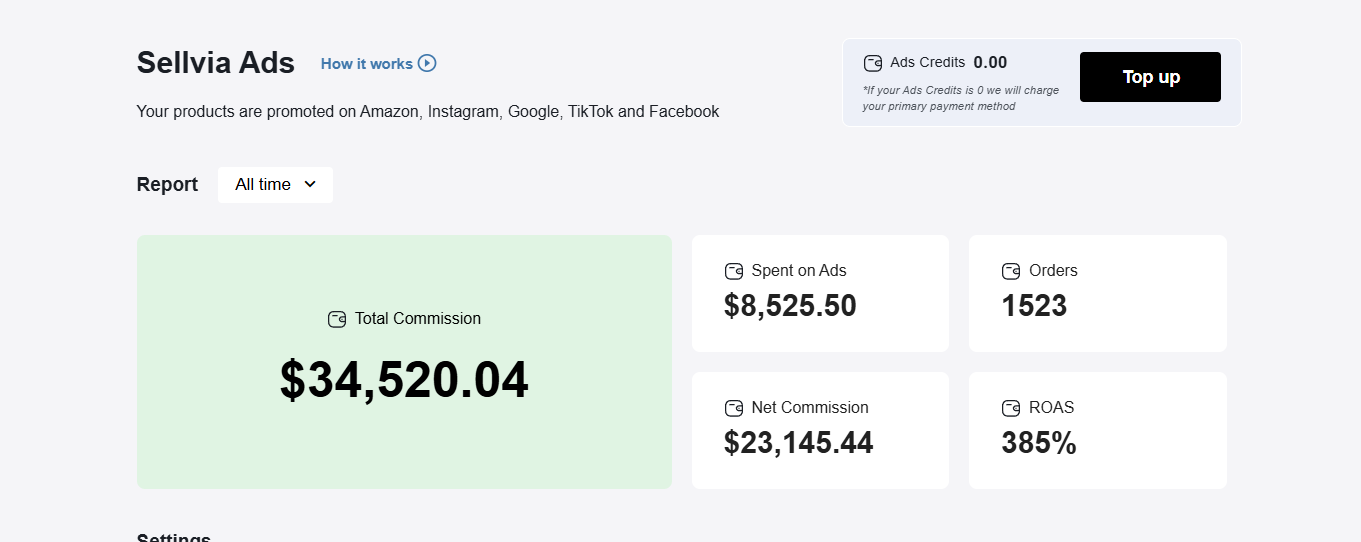
That’s not fake.
$34k commission.
385% ROAS.
1,500+ orders.
That’s real activity.
Stuff is shipping.
Cards are getting charged.
Revenue is moving.
So no - this isn’t some ghost dashboard fantasy.
But here’s where things get spicy.
Making money is not the same as keeping money.
The “Bro I’m Printing” Phase
This is how it usually starts.
You see numbers like that.
You feel smart.
You feel like you cracked it.
You start thinking:
“Okay, this is scalable.”
You bump budget.
You screenshot the dashboard.
You mentally spend money that hasn’t even settled yet.
And this is the exact moment fragility begins.
Because when things look easy, people get sloppy.
Let’s Zoom In Where It Actually Hurts
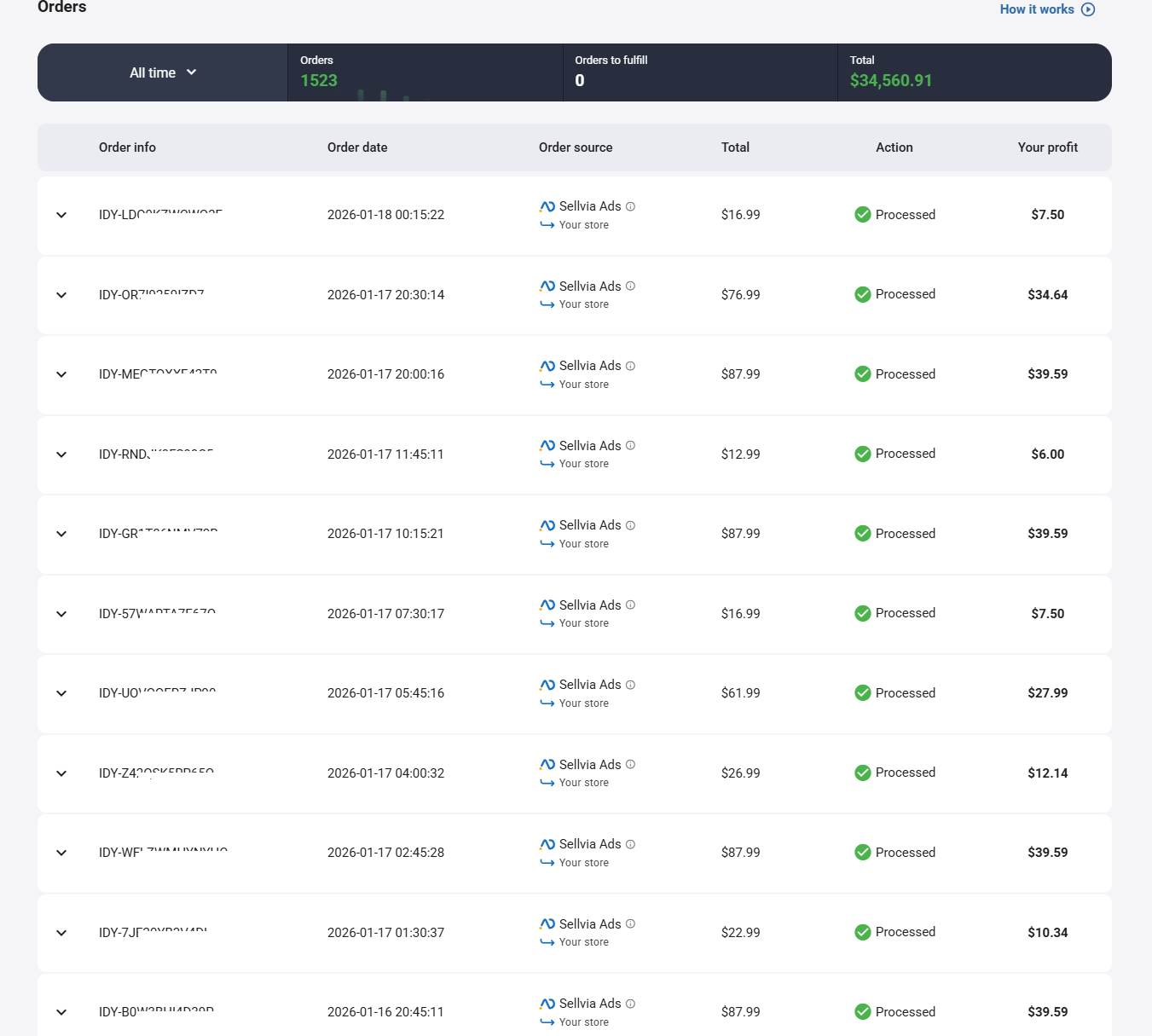
Look at those profit numbers.
$6
$7
$10
$12
$15
Let’s call it $12 average.
Now be honest with yourself.
Is $12 a huge cushion?
No.
It’s workable.
But it’s tight.
Now imagine CPA rises $6.
Congrats.
Half your profit just vanished.
CPA rises $10?
You’re basically breathing through a straw.
This is thin-margin life.
Nobody talks about it because everyone’s flexing revenue.
Thin Margins Don’t Explode. They Erode.
Here’s the dangerous part.
You don’t wake up to disaster.
You wake up to:
“Hmm, CPA is slightly up.”
“Conversion is a bit softer.”
“Refunds are a little higher.”
Nothing dramatic.
But stack them.
CPA +5
Conversion -10%
Refund +3%
Now your $12 margin is $4.
But because revenue still looks decent, you don’t panic.
And that’s how you slowly bleed.
The Conversion Drop That Slaps You
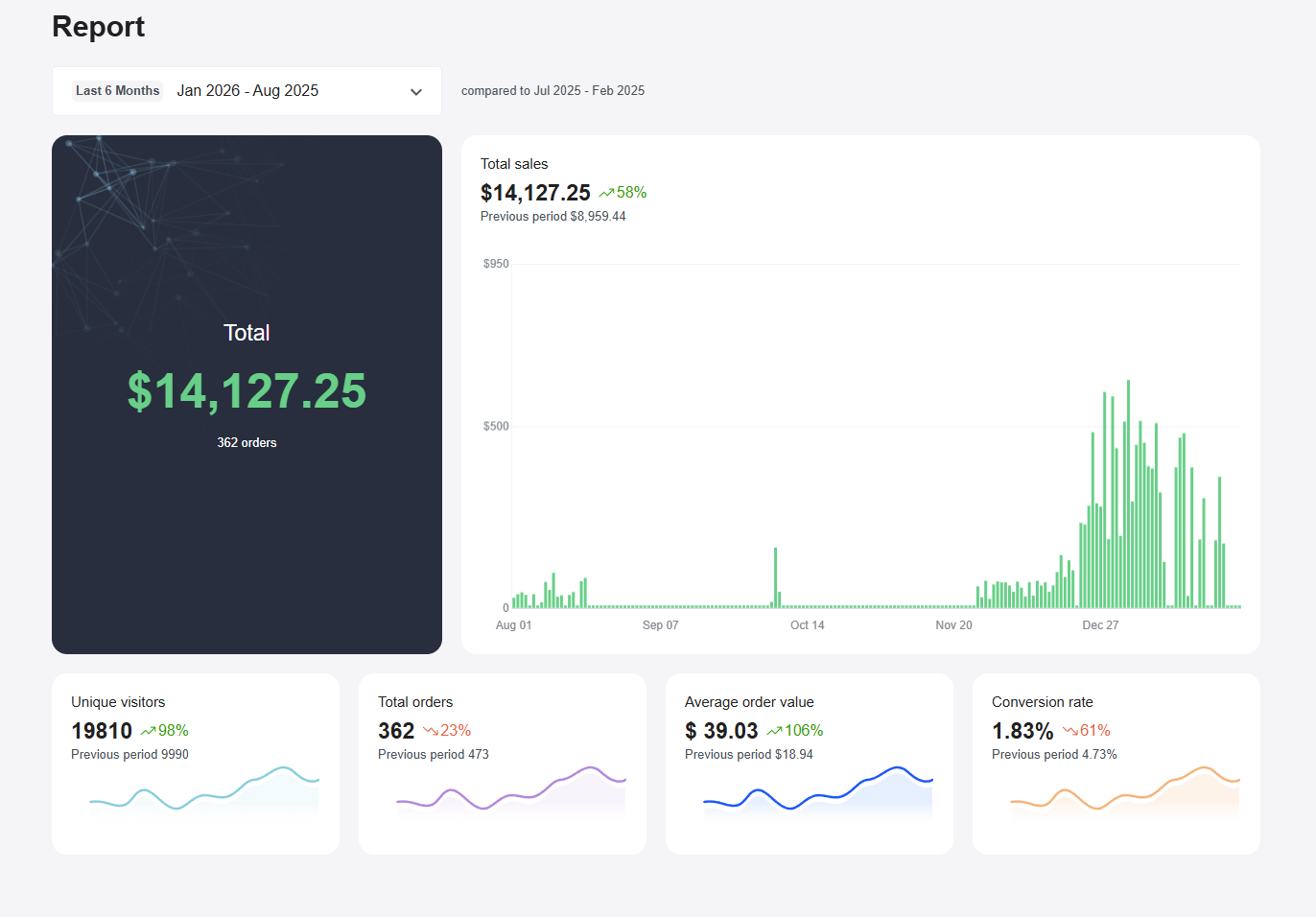
Visitors up almost 100%.
Orders down.
Conversion nuked 61%.
That’s not “small fluctuation.”
That’s the algorithm reminding you who’s boss.
And what do beginners do when conversion drops?
They increase budget.
Because obviously more spend fixes everything, right?
No.
More spend into weak conversion just lights money faster.
“But My ROAS Is Still Good”
Yeah.
Until it isn’t.
ROAS is like looking at your abs in good lighting.
Looks solid from the right angle.
But it hides a lot.
ROAS doesn’t show:
– how close you are to break-even
– how fast CPA is creeping
– how tired your creative is
– how fragile your margin cushion is
You can have sexy ROAS and zero shock resistance.
The Ego Scaling Trap
Here’s what actually kills accounts.
Strong month → dopamine.
Dopamine → confidence.
Confidence → bigger budgets.
Bigger budgets → auction pressure.
Auction pressure → higher CPA.
Higher CPA → thinner margin.
Thinner margin → panic.
Panic → bad decisions.
It’s a loop.
And the platform isn’t pushing the buttons.
You are.
Volume Is Not Protection
People love saying:
“I did 1,500 orders.”
Cool.
If you miscalculate margin by $3 per order, that’s $4,500 gone.
Scale magnifies mistakes.
It doesn’t fix them.
If your math is slightly wrong at small scale, it becomes expensive at big scale.
That’s not a platform problem.
That’s physics.
The “It Was Working” Story
Every negative thread starts the same:
“It was working and then suddenly…”
No.
It wasn’t sudden.
It was gradual.
You just didn’t notice early signals.
CPA drifted.
Conversion softened.
Frequency rose.
Creative fatigue crept in.
You ignored it because revenue still looked nice.
By the time you reacted, erosion already compounded.
Paid Traffic Is Not a Vending Machine
A lot of people treat it like this:
Put money in → money comes out.
But paid traffic is probabilistic.
Auction-based.
Competitive.
Volatile.
If your entire model collapses after a 20% CPA increase, the issue isn’t fraud.
It’s that your structure had no tolerance.
Cash Flow - The Silent Killer
Here’s another thing nobody talks about.
Ad spend is immediate.
Product cost is immediate.
Your margin buffer is theoretical until settlement.
If conversion weakens while you keep spending aggressively, cash pressure builds fast.
And once cash pressure hits, logic disappears.
You either:
Over-scale to “make it back.”
Or panic shut everything down.
Both are expensive.
Automation Isn’t a Seatbelt
Yes, Sellvia simplifies a lot.
You’re not negotiating with suppliers.
You’re not packing boxes.
You’re not building Shopify from scratch.
But automation doesn’t protect you from:
- Bad scaling
- Weak creative
- Ignoring metrics
- Emotional reactions
It organizes operations.
It does not stabilize markets.
The Real Problem No One Wants to Admit
Most people don’t lose because the system doesn’t work.
They lose because they:
- Scale too fast
- Operate on thin reserve
- Ignore drift
- Confuse revenue with durability
- Treat one good month like a permanent state
That’s not scam territory.
That’s volatility exposure.
The Brutal Reality
Sellvia can absolutely generate money.
Your own numbers show that.
But it cannot:
- Protect thin margins
- Guarantee stable CPA
- Prevent conversion collapse
- Stop emotional scaling
If you build with narrow tolerance and scale aggressively, volatility will eventually humble you.
Not because it’s fake.
Because it’s auction-based paid traffic.
And auction-based paid traffic doesn’t care about your excitement.
The Stuff That Actually Breaks People (And It’s Not the Dashboard)
We already talked about fragility.
Now let’s talk about something way more dangerous:
Decision decay.
Because accounts rarely die from numbers.
They die from how people respond to numbers.
The KPI Addiction Problem
Here’s something nobody admits.
People don’t track business.
They track dopamine.
Revenue up? Feels good.
ROAS green? Feels good.
Orders flowing? Feels good.
But business health isn’t about “green numbers.”
It’s about trend interpretation.
And once someone gets addicted to seeing big top-line metrics, they stop looking at boring stuff:
- Trend slope.
- Behavior shift.
- Signal change.
They chase the feeling of the strong month.
And that’s how they overextend.
The Illusion of Control
When automation works, people start believing they’re in control.
“I figured it out.”
But paid traffic is not control.
It’s probability management.
You are influencing behavior in an auction.
You are not commanding it.
The illusion of control makes people:
– Increase risk exposure
– Reduce safety margins
– Scale faster
– Experiment carelessly
And because things worked once, they assume control exists.
It doesn’t.
It’s alignment, not control.
Strategic Lock-In
This one is subtle.
When someone:
- Uses internal ads
- Uses platform structure
- Uses built-in product pipeline
They create ecosystem dependency.
That feels efficient.
Until performance dips.
Then switching feels expensive.
So instead of adjusting strategy, they defend the current one.
That’s lock-in bias.
It keeps people stuck longer than they should be.
Signal Blindness
After a few good months, something weird happens.
People stop seeing weak signals.
Early warning signs become background noise.
Slight conversion drift?
“Probably nothing.”
Slight CTR decline?
“Algorithm phase.”
Subtle drop in AOV?
“Seasonality.”
The human brain protects optimism.
And optimism delays correction.
Correction delayed = erosion accelerated.
The Narrative Rewrite
Here’s where it gets dangerous.
When performance softens, people rewrite the story.
Instead of:
“I scaled too aggressively.”
It becomes:
“Something changed on the platform.”
Instead of:
“I didn’t refresh creatives.”
It becomes:
“The model is flawed.”
The ego protects itself by externalizing fault.
That narrative shift is where structural learning stops.
And once learning stops, decline speeds up.
Decision Speed Collapse
Strong months create fast decisions.
Declining months create slow decisions.
When things go well, people move quickly.
When things start weakening, hesitation appears.
And hesitation in paid traffic is expensive.
The earlier you cut weak elements, the less erosion.
But ego delays cuts.
Delay compounds damage.
The “I’m Too Deep In” Trap
This is pure psychology.
After spending months building and scaling, people feel invested.
They don’t want to reduce.
They don’t want to pivot.
They don’t want to admit structural weakness.
So they stay.
And staying too long is often more expensive than exiting early.
Momentum Dependency
Some operators don’t build systems.
They build momentum.
Momentum feels powerful.
But momentum is fragile.
Systems survive dips.
Momentum collapses under them.
If your entire growth relied on one winning creative, one angle, one audience, that’s not a system.
That’s a spike.
Spikes don’t scale forever.
Identity Attachment
Here’s a harsh one.
When revenue grows, people attach identity to it.
“I’m running a successful store.”
When performance dips, it feels personal.
And when something feels personal, objectivity disappears.
Instead of making cold decisions, people make emotional ones.
Emotion + volatility = loss.
The Real Hidden Risk: Overconfidence After Early Success
The most dangerous moment isn’t losing.
It’s winning early.
Early success creates unrealistic expectation curves.
People assume linear continuation.
But paid traffic curves are nonlinear.
They spike.
They plateau.
They soften.
They require refresh.
If someone expects constant upward slope, they misinterpret plateau as failure.
And panic into instability.
Dependency Stacking
This one is structural.
When someone stacks:
- Paid ads
- Platform ecosystem
- Thin margin
- High scale
- Low reserve
They create layered dependency.
Each layer adds sensitivity.
When one layer shifts, the whole stack wobbles.
If you don’t understand stack sensitivity, volatility feels random.
It’s not random.
It’s cumulative.
The Truth Most People Avoid
The model can work.
The dashboard proves that.
But it requires:
- Detachment
- Discipline
- Capital buffer
- Creative rotation
- Tolerance modeling
Without those, it’s not the platform that breaks you.
It’s your reaction speed.
The Final Real Talk
If someone loses money here, it’s rarely because:
“It doesn’t work.”
It’s because:
- They treated early wins like permanent proof.
- They scaled without modeling tolerance.
- They ignored weak signals.
- They stayed too long under erosion.
- They confused automation with stability.
That’s not scam territory.
That’s volatility mismanagement.
And volatility punishes optimism harder than incompetence.