Why do some people succeed with Sellvia while others fail?
I’ve watched this play out enough times that I can basically predict who’s going to make it and who isn’t within the first two weeks of someone joining this forum.
Not because I’m psychic. Because the patterns are that obvious once you’ve seen them a dozen times.
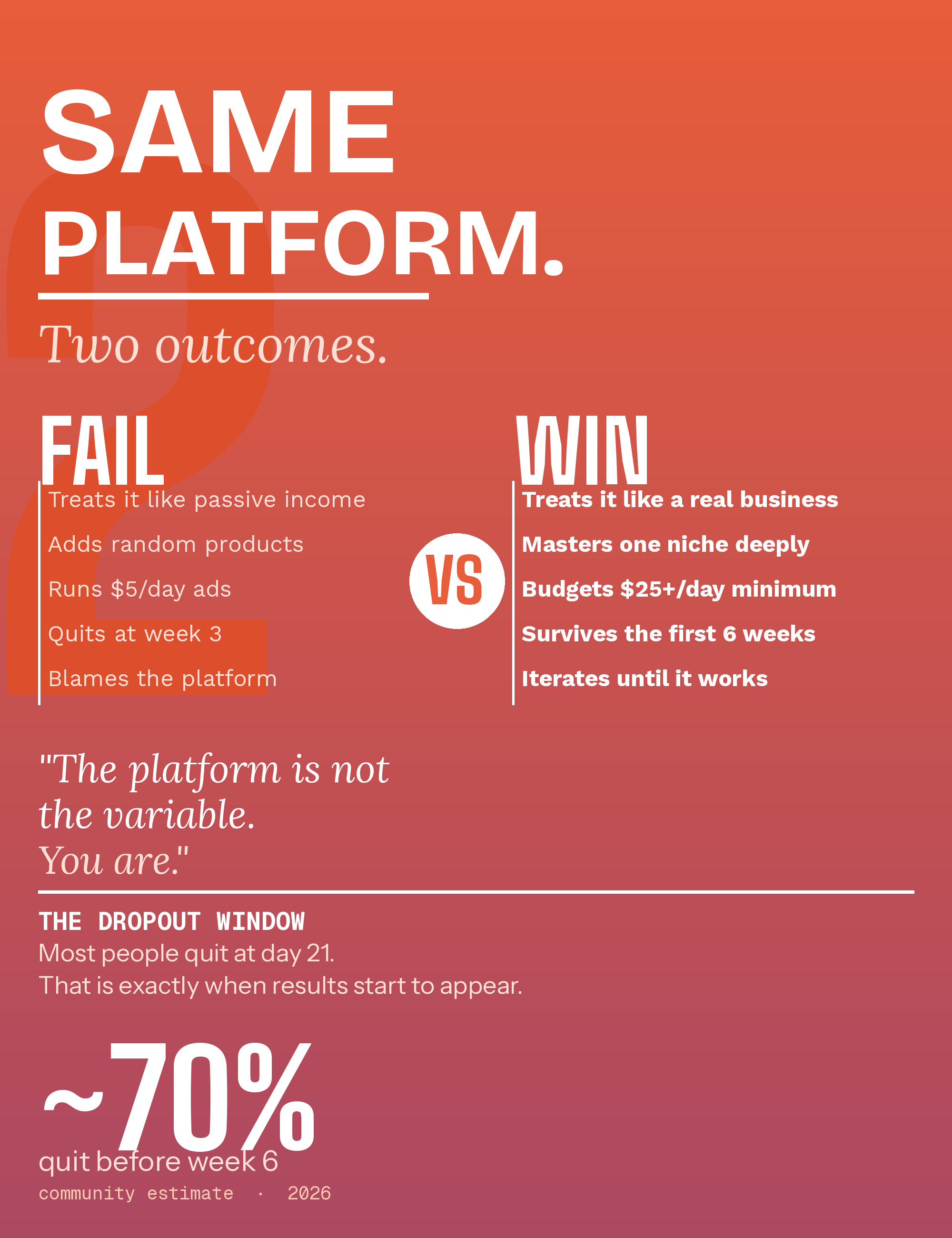
Same platform. Same catalog. Same fulfillment system. Same $39 subscription. Wildly different results. And people keep asking if the platform works like that’s the variable that explains the gap. It’s not. The platform is just a tool. What you bring to it is what determines the outcome.
Let me break down what I actually see separating the two groups.
The mindset problem nobody wants to talk about
The people who fail almost always come in with the same mental model: buy the subscription, add some products, run some ads, collect money. The platform as a vending machine. Insert $39, receive income.
The people who succeed come in with a different mental model: I am starting a small business that requires me to learn marketing, customer psychology, ad mechanics, and product research. The platform is infrastructure. Everything else is on me.
That sounds obvious written out. But the number of people who genuinely don’t operate this way is staggering. Sellvia’s onboarding is smooth enough that it accidentally reinforces the vending machine mentality - everything is set up for you so fast that it feels like the hard part is done. It isn’t. The hard part hasn’t started yet.
The niche problem
People who succeed pick a lane and stay in it. One niche. One type of customer. One voice across everything - product selection, ad copy, store feel. They understand who they’re selling to and they build everything around that person.
People who fail add 40 products across 6 unrelated categories because “more products = more chances to sell something.” The logic sounds reasonable. The execution is a disaster. You end up with a store that makes no sense to anyone, ads that have no coherent audience, and split attention that produces diluted results everywhere.
Niche focus isn’t about limiting yourself. It’s about depth of understanding. If you sell home organization products you eventually understand that customer so well that your ad copy, your product selection, and your retargeting all compound on each other. That compounding is where the money actually lives.
The budget problem
This one is painful because it’s so preventable.
You cannot run viable Facebook or TikTok ads on $5 a day. You just can’t. The algorithm needs data to optimize - impressions, clicks, add-to-carts, purchases. At $5 a day you’re generating so little activity that the algorithm is essentially flying blind. You’ll spend three weeks burning $100 and conclude the platform doesn’t work when you actually just didn’t give the system enough input to do anything with.
The minimum viable daily budget for a real test is $20-25 per ad set. That’s the floor, not the ceiling. Under that and your data is statistically meaningless. I’ve said this to people before and they say they can’t afford $25/day. Then they also can’t afford to test this business model yet. That’s a real answer, not a judgment. Save more before you start, or wait. But don’t start with a broken budget and blame the platform when it doesn’t produce.
The timeline problem
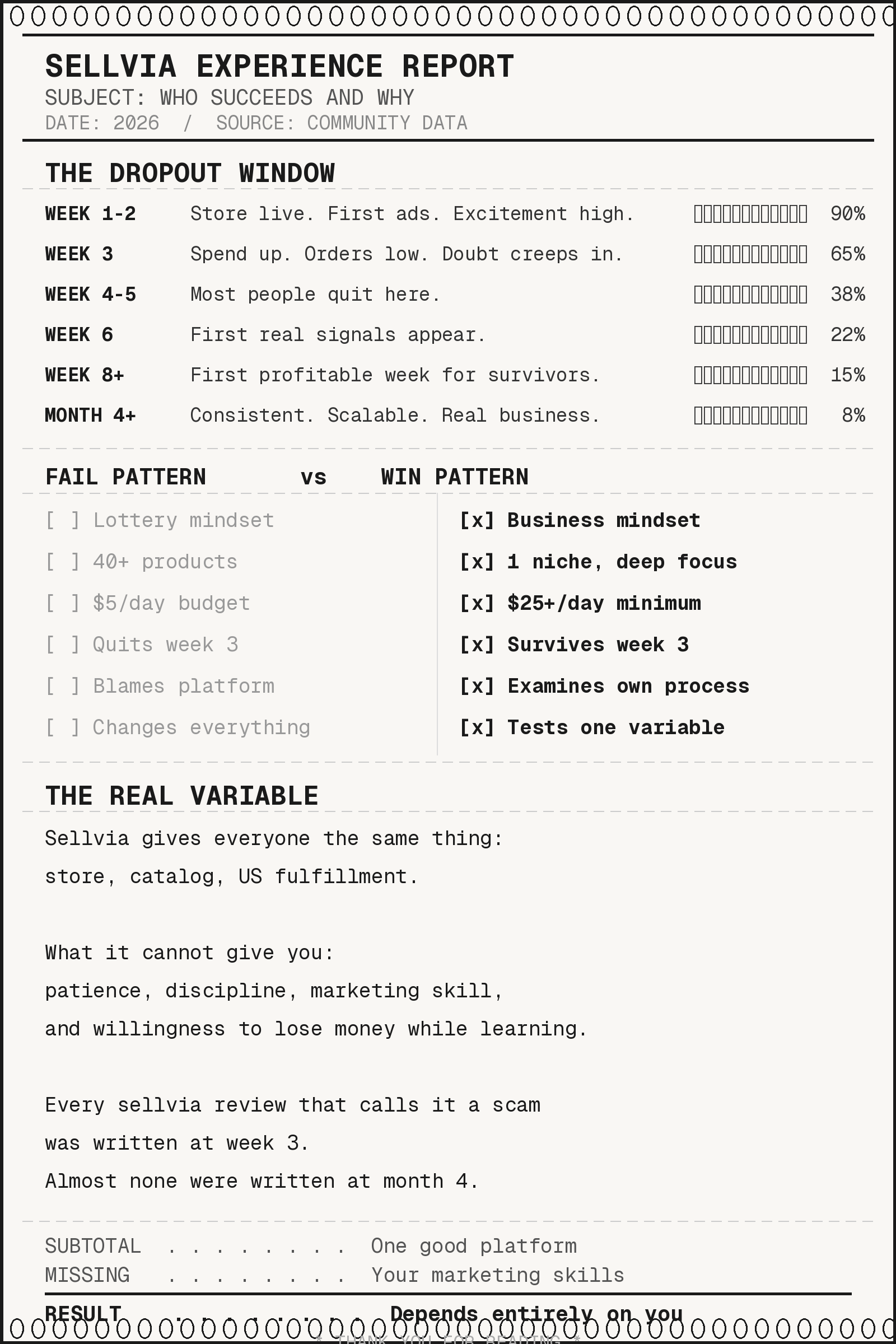
Most people quit at week three.
Week three is exactly when you’re spending real money, getting limited returns, and questioning every decision you’ve made. It’s the lowest point on the emotional curve. It’s also the point right before things typically start to turn if you’re doing the fundamentals correctly.
I’ve seen this so many times. Someone posts at day 21 that Sellvia is a scam, they’ve spent $300 and made two sales, they’re done. Then three weeks later someone else posts about their first profitable week - same starting timeline, same platform, same basic setup.
The difference isn’t luck. It’s that the second person understood the first 45 days are data collection, not profitability. You’re buying information about what works. The cost of that information is built into the business model. People who treat it as tuition rather than loss survive it. People who treat every dollar of ad spend as money that should have returned profit immediately don’t.
The iteration problem
Successful people change one variable at a time and measure the result. They test a new creative. Then new copy. Then a new audience. They build actual knowledge about what their specific store and products respond to.
Failing people change everything simultaneously when results are bad, then wonder why they can’t identify what worked when they accidentally get a good result. Or they change nothing for weeks and keep running a dead campaign because they don’t want to admit it isn’t working.
Iteration requires two things: patience to let a test actually produce data before judging it, and discipline to kill things that aren’t working. Most people are bad at both.
The blame problem
This is the last one and maybe the most important.
People who eventually make it on Sellvia - or any platform - share one trait: when something doesn’t work, they ask what they did wrong before they ask what the platform did wrong. They look inward first.
People who fail tend to do the opposite. Bad ad results = platform sent bad traffic. Low conversion rate = platform’s fault. No sales in week two = the whole model is broken. The external attribution is a defense mechanism. It protects you from having to examine your own decisions. It also guarantees you’ll repeat the same mistakes on the next platform you try.
There’s actually a solid thread on this forum asking whether the dropshipping model itself is still viable in 2026 or whether everyone is just too late - Is dropshipping in 2026 still worth starting or are we just late to the party? - the discussion in the replies is worth reading because it gets into exactly this question of what separates realistic expectations from the fantasy version people come in with.
The honest answer I’d give anyone asking if they’ll succeed on Sellvia: I don’t know, but I can tell within the first conversation whether they’re approaching it like a business or like a lottery ticket. That distinction predicts outcomes better than any feature comparison or sellvia review I’ve ever read.
Real question
At what point did it click for you that this required a completely different mental approach than you came in with? And for people who’ve failed with Sellvia - looking back, was there a specific decision point where you can see now that you went wrong?

 I mentor a few people through their first ecom stores and this is the single most common mistake I see. people treat ad budget like a risk to minimize rather than an input to optimize. you cannot get useful data from $5/day. you’re not being cautious, you’re just guaranteeing bad results and then drawing the wrong conclusion from them.
